Showing posts with label Abolition. Show all posts

Monday, November 11, 2013

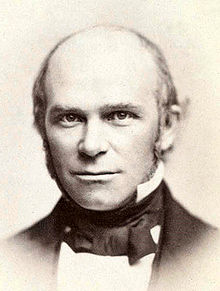
Theodore Dwight Weld

I was born on September 23rd, 1803, in Hampton Connecticut. I grew up in a strict and religious household and went to academies where I learned about religion such as Andover Academy in Massachusetts and Lane Theological Seminary in Ohio. I was never close to my father and felt it was necessary that I to go into the study of religion. I worked as a travelling lecturer, a public speaker, where I witnessed slavery for the first time. Since then I joined the American Anti-Slavery Society. I thought the best place to speak against slavery was the West because they were only just developing as states and yet to have a collective opinion on the issue. I've traveled throughout the West and South and even back North where I've convinced and converted thousands, including members in the house. I assisted John Quincy Adams in his campaign against slavery in the House. My converts were a number of seventy and I taught them the sin freeing rightness of abolitionism. They traveled throughout the country spreading pamphlets I've made such as "The Bible Against Slavery".
My goal was to spread anti-slavery, abolitionism, to free the slaves ever since my first experience during my travelling. I joined Captain Charles Stuart and Charles G. Finney in a Holy Band of evangelists where I realized the sin of slavery. I then joined the American Anti Slave Society to work towards the emancipation of the slaves. I've used the words of the Constitution to reveal the hypocrisy and sin of the nation. Equal rights of the slaves is what I demanded because God gave life to all men with no condition of birth and no shade of color. Slavery is a sin against God
In my speeches I've told people the only way relieve America of it's sin is to follow the path of moral rightness and end slavery. The nation is not truly based on liberty because millions are denied freedom and basic rights. Free all the slaves and grant them equal rights as fellow human beings. Whoever robs a man of his rights overthrows justice, unsettles the foundations of human safety, and assumes the power of God. I was able to convert thousands of people, including members of the House and joined President John Q. Adams in his campaign against slavery in the House. There were times the AASS lost popularity due to our pamphlets coming on too strong. "Immediate Emancipation" brought protests and mobs to our feet. And with me losing my voice I was out of the speeches and was left to publish pamphlets and training converts. In my career I've published a few works but never under my name, the magazine Emancipator, the pamphlet "The Bible Against Slavery", and the book American Slavery as It Is.
Though my primary goal is abolition of slavery I've met a few women that would become leaders in the fight for women's rights such as Harriet Beecher Stowe, daughter of the head of Lane Seminary and writer, Angelina Gimke and Sarah Grimke, sisters who I met at Lane and joined the abolitionist cause. These three women were some of the earliest leaders in women's rights.
Education is another topic that complies with me. I've traveled teaching the people and youth of the nation to realize the wrong of the country to promise liberty and rights but not stay true when it comes to certain groups of people. Religious guidance was also an influence in my teaching and training throughout my anti-slavery movement.

John C. Calhoun

Hello, My name is John C. Calhoun. I was born March 18, 1792 in South Carolina. I was the fourth child of Patrick Calhoun and Martha Caldwell. When I was Seventeen, I had to quit school to help my father's farm after he became ill. When I my brother gave me the money to return to my studies, I graduated college at Yale university and I studied Law. I eventually became Vice President under Adams and Jackson. I also was the secretary of State, and War. I was a senator and Representative for the great state of South Carolina.


Issue: I have an issue with the Tariffs placed upon us in South Carolina. The Abomination tariff impacts my State negatively. I believe that this tariff has been placed on us unnecessarily, and I believe it should be removed. I have my set of beliefs because of the tradition, culture and economic tendencies of my state. We already try and get a lot of work done so we have more crops and livestock to export, but these tariffs reduce our income and profit, making it harder for us to import goods.

Solution: I wrote the South Carolina Exposition in secrecy. This document was to help acknowledge our great disapproval of the Tariff. We eventually would nullify the tariff, but that only caused smaller ones to come in and consume us. I'm starting to think that the only effective way to end this problem is to secede from the union.

Beliefs and Relations: I'm very Pro-state and Pro-Slavery. I always wanted the peoples voices heard. I would feel comfortable sitting around people who live in the south, and like Slavery. I wouldn't feel comfortable sitting around northerns against slavery, or African Americans in the crowd. I feel like I would feel most comfortable sitting by Henry Clay, because, after all, I helped him with his American System. and We were War Hawks together. I feel that I would die if I sat next to Jefferson, because of the South Carolina Exposition that I wrote.

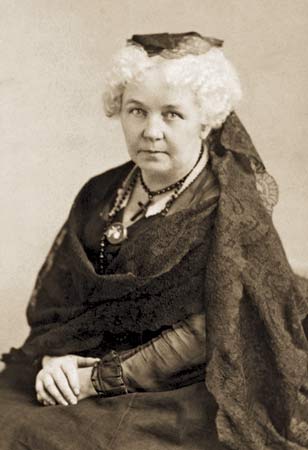
Elizabeth Cady Stanton

                                                 
File:Elizabeth Stanton.jpg

Personal Statement :
 Hello, my name is Elizabeth Cady Stanton and I was born on November 12, 1815, in Johnstown, New York. I attended Johnstown Academy, where I studied Latin, Greek, mathematics, religion, science, French, and writing until the age of 16. After graduating the academy, I went on to Union College, as my older brother, Eleazar, had done previously. I am the daughter of a lawyer who made no secret of his preference for another son. That is the reason for my desire to study and be equal as all the other males. I graduated from the Emma Willard's Troy Female Seminary in 1832 and I am drawn to the abolitionist, temperance, and women's rights movements through visits to the home of my cousin, the reformer Gerrit Smith. I believed in the expansion of the Fifteenth Amendment which includes voting rights for all women, this amendment also passed, as it was originally written, in 1870. I am also the author of the "Declaration of Rights and Sentiments" which granted rights to women and African Americans. 

Issue(s) :  

With Lucretia Mott and several other women, I held the Seneca Falls Convention in July 1848. At this meeting, we prepared the “Declaration of Sentiments” and took the lead in proposing that women be granted the right to vote. This declaration proposed grand movement for attaining the civil, social, political, and religious rights of women. Together with Susan B. Anthony, we declined to support passage of the Fourteenth and Fifteenth Amendments to the United States Constitution. I opposed giving added legal protection and voting rights to African American men while women, black and white, were denied those same rights. I authored both The Woman's Bible and her autobiography, along with many articles and pamphlets concerning female suffrage and women's rights. During the Civil War I concentrated my efforts on abolishing African American rights, but afterwards I became even more successful in promoting women suffrage. In 1868, I worked with Susan B. Anthony on the Revolution, a militant weekly paper. We then formed the National Woman Suffrage Association (NWSA) in 1869. I was the NWSA’s first president - a position I held until 1890. The organization then merged with another suffrage group to form the National American Woman Suffrage Association. I served as the president of the new organization for two years. My stance on the issue with women and slave rights is that the prejudice against color, of which we hear so much, is no stronger than that against sex. It is produced by the same cause, and manifested very much in the same way. My source of motivation is organized Christianity, which relegated women to an unacceptable position in society.

Solution(s) :
My solutions to the unfair rights to women and African Americans was traveling to give lectures and speeches. I called for an amendment to the U.S. Constitution giving women the right to vote. I also worked with Anthony on the first three volumes of the History of Woman Suffrage (1881–6). With my daughter, Harriet Stanton Blatch, we published a critique, The Woman's Bible, which was published in two volumes. The first volume appeared in 1895 and the second in 1898. This brought considerable protest not only from expected religious quarters but from many in the woman suffrage movement.  

Relationship to Others: 
I am passionate about women's rights and equality, so I would feel comfortable sitting next to someone with a related  opinion. I would also be comfortable sitting next to atavists with religious leanings supporting divorce rights, employment rights, and property rights for women. I believe fundamental sexism is part of organized Christianity. On the other hand, I would feel very uncomfortable sitting next to someone who would deny any rights to women and African Americans. Someone who believes women should obey the man and neglects women capability.         


Sojourner Truth


Personal Statement:
Hi, my name is Sojourner Truth, which is my self given name. I was born under the name Isabella Baumfree in Swartekill, Ulster County, New York, in 1797. I didn't have any formal education, for instance, I was never taught how to read or write.  I am notable to society because I was the first African American woman to win a court case against a white man. I also helped to change the way that people looked at women's rights, making public transportation companies change their policies through a court case. In order to help spread the word of slavery and women’s rights, I wrote my very popular autobiography, Narrative of Sojourner Truth: A Northern Slave.

Issue(s):
I was involved in the women's rights movement, in fact, I was the most powerful advocate. I believe that women as just as hard working as men, if not more. When I gave my speech, "Ain't I a woman?" I was able to show off to the people exactly how much it means to me to look at women as an equal to men. Also, being a former slave myself, I would also like to stand up against slavery. I went to the White House and spoke with president Lincoln in order to speak up and have the freed-people be able to get a job. I was mostly driven by religion. I believed that God was going to help us all out eventually if we put our faith in him.

Solution(s):
A way that I took a stand against these issues is by going to court and speaking out. To me success means to be able to achieve something you have set your mind to by working hard and standing up for what you believe is right. My ultimate goal was to change people's point of view upon women. I want them to all see women as an equal to man. One of the biggest challenge I had to face was getting beaten by my owner who didn't agree with my point of view. Another challenge that got in my way is the amount of people that would actually be against me. Speaking up for me was very hard.

Sojourner Truth


Personal Statement: My name is Sojourner Truth but I was born as Isabella Baumfree in 1797 in Swartekill, New York. I did not go to school because I was a slave for the first 29 years of my life so i did not know how to read or write. I spoke only Dutch until the 9th year of my life. I ran away from slavery a year before it was abolished in the state of New York in 1827. I later won a court case against a white man in order to get my son out of slavery in Alabama, where he was severely abused by his owner. I was the first woman to go to court against a white man and win a court case. I also fought for women's rights and even spoke at the Ohio Women's Rights Convention where I gave my “Ain’t I a Woman” speech. In June of 1843 I changed my name to Sojourner Truth and became a Methodist. I spent the rest of my life traveling and preaching about the abolition of slavery and women’s rights.

Issue: From the day I was born I was a slave, both my parents and all of my siblings were also slaves, which made me have strong feelings against slavery. As a 9 year old I was sold from one slave owner to another along with a flock of sheep for $100. I was abused and mistreated by my owners on a daily basis and they even forced me to marry and have kids with another one of their slaves that way they could keep my offspring as property. Although I ran away from it I still believe that slavery is wrong, it lets whites and men with power treat others horribly and use them for your own profit just because of their skin color.
Solution: I ran away from slavery after 29 years of being abused and taken advantage of. A year later I found that one of children was illegally sold to a slave owner in Alabama. I knew the treatment of slaves down there was a lot harsher so I was willing to do anything to get him out of there and freed. I went to court and won the case and got my son back. It was the first time a judge made a decision in favoring the African American over a white man. I believe that slavery should be abolished, and that state and federal authorities should see their wrongdoing and end it altogether. I wasn't successful at ending slavery but I sure did contribute all the efforts I could make to get the word out through my speeches and the court case. I also met President Lincoln during the Civil War and discussed the enlistment of blacks in the army.

Relationship to others: I spoke about abolition, women's rights, prison reform, and preached to the Michigan Legislature against capital punishment. Not everyone welcomed my preaching and lectures, but I had many friends and staunch support among many influential people at this time, including Amy Post, Parker Pillsbury, Frances Gage, Wendell Phillips, William Lloyd Garrison, Laura Smith Haviland, Lucretia Mott, Ellen G. White, and Susan B. Anthony.

Henry Clay


Personal Statement:
Hello, my name is Henry Clay. I was born April 12, 1777 in Hanover County, Virginia. My parents are Reverend John Clay, who passed away in 1781, and Elizabeth Hudson Clay, and I am also the seventh of nine children. I grew up in Hanover County but ten years after my father passed my stepfather moved our family out to Richmond where I worked as a clerk and later a secretary to the chancellor of the High Court of Chancery. I had very little regular education, but I often read from books in Wythe's library and made the best of the little education I had. I moved to Lexington, Kentucky in 1797 and became a successful while also meeting my wife ,Lucretia Hart, two years later and who I have 11 children with. My lifestyle was  similar to that of any man living in the South or West. I was a drinking and gambling man, but that didn't stop me from having great political success. The world was my school and as John Quincy Adam's said, I am a half educated man with all the virtues indispensable to a popular man.

Issues:
I was an American political leader and secretary of state, and I came to national prominence as leader of the "War Hawks," who drove the country into the War of 1812. I was a Congressman and was elected Speaker of the House six times. I was chosen to as part of the group of men to go make the Treaty of Ghent. I also developed the "American System" that involved the Bank of the U.S and protective tariffs. One of my best known achievements was the Missouri Compromise. For the next 40 years, I worked for international peace and sought to reconcile warring factions in the nation. I was a big presence in the abolition movement.

Solution:
Even though my American system was put into effect, it didn't reach its full potential until after the civil war. I believe in a functioning economy based off of protective tariffs. Another thing to note is that although I made the Missouri Compromise, I was neither for or against slavery. I was indeed a slave owner, but I believed in the eventual emancipation of slaves. I was successful in both of my goals, but it didn't come easy, I faced a large amount of opposition, especially from the controversy of the "Corrupt Bargain".
Relationship to others:
Overall I could say that I could sit next to almost anyone who isn't a Jacksonian due to the "Corrupt Bargain" issue. Since I am neutral to the slavery issue I would have no problem sitting next to someone like Frederick Douglas, or even someone who supports slavery.

Mother Ann Lee

Personal Statement: My name is Ann Lee Stanley, but I am known as Mother Ann, since I am the second coming of the messiah. I was born in Manchester, England, on February 29, 1736. My father, John Lee, was a poor blacksmith who could not afford to send me to school. I have 7 other siblings. I worked in the textile mills in Manchester until my early twenties, when I became a cook for the infirmary and madhouse. In January 1762, I was forced by my father to marry his apprentice, Abraham Standerin. Abraham and I had four children, but all of them died in their childhood. I believe that this was a judgement of my acts. For 9 years, I felt guilty and afraid of what might happen should I die in such a state. Then, during an imprisonment, I received a vision of what the Shaker movement should come to be. In a later imprisonment, it was revealed to me that I am the second coming of the messiah. I founded and became the leader of the Shakers. I soon decided that we had to leave for America to convert the people there. My 8 followers and I left for the colonies and arrived in 1774. My husband left me while we were in New York. Although my followers and I endured hardships, we established a community in Niskeyuna, New York. The Great Awakening brought us many converts, and we established more communities in New England in the later years of the Revolutionary War. I passed leadership to James Whittaker and after he took charge, our community prospered.

Issues: I was a religious reformer. I believe that lust is the cause of all evil and that absolute celibacy is necessary. I think the Church is too materialistic and that the clergy is immoral. When I was a child, Manchester was a terrible place to be. It was overcrowded and horribly filthy. Many of its workers drank constantly in desperation, causing them to sin and lose all moral consciousness. At this time, I realized that lust was the was the cause of original sin, and therefore, it is the cause of all evil. My two visions in prison showed me what I needed to do. Those revelations motivated me to reform religion.

Solution: I believe the solution to avoiding evil is absolute celibacy. I want to create a utopian society just like my Shaker communities. I was moderately successful in attaining my goal. I was able to gain many new converts during the Great Awakening, and during my trip ending in 1781, I established more Shaker communities throughout New England. Yet, I did not reform the religion in all of America. We were often persecuted in England for our different practices. When we arrived in America, though, we were persecuted because we were believed to be British loyalists, although we didn’t take a side in the war. We were later thought to be British spies and several of us were imprisoned. When we started to see a decreasing number of converts, we started to face a decreasing amount of members, since we were strict concerning absolute celibacy.  

Relationship to Others: I would feel comfortable sitting next to Lyman Beecher and Robert Owen because they have similar backgrounds and ideals. I would be uncomfortable next to Henry Clay because his stance on war is in direct opposition to mine.

William Lloyd Garrison


Hello to you all! My name is William Lloyd Garrison, I was born in Newburyport, Massachusetts in 1805. I was born into a poor family, My father abandoned my family when I was 3 years old. Since my family was poor, my education wasn't the best, I lived in a baptist deacon (basically a church) for some time and that's where I got my education. At the age of 13 I was given an apprenticeship as a writer and editor for the newspaper Newburyport Herald. I’m known for leading an abolishment against slavery  campaign through newspaper. I founded the American Antislavery Society. I was involved in the issues of slavery and war. My standing on them was, I wanted slavery abolished and I opposed war, for I am a pacifist. While working for National Philanthropist the newspaper I met Benjamin Lundy who was the antislavery editor of the Genius of Emancipation and it was him who brought to my attention the issue of slavery. From then on I sought out to do something about this injustice. I wanted legislation to end slavery but I wanted nothing to do with politics so I just spoke my idea through printed text. I’ve been attacked by a mob before for what I said in the newspapers but that didn't stop me. Just before my death I got to see my life’s work finally get paid off with the passing of the 13th amendment which abolished slavery. I’d love to sit with Frederick Douglass and John Greenleaf Whittier at the dinner table. Someone I wouldn't like to sit next to is Arthur Tappan.

Joseph Smith


Personal Statement: I was born on December 23, 1805 in Sharon, Vermont. I was deprived of the benefit of formal education. I received limited instruction in reading, writing, and basic arithmetic. I founded the Latter Day Saint movement also known as Mormonism. Mormonism was an American made religion designed to spread its influence worldwide. I published the Book of Mormon at age 24 and attracted tens of thousands of followers during the Second Great Awakening. I also ran for president in 1844.


Issues: I was concerned with the issue of religion in my time. I reformed religion by creating Mormonism. I also was an abolitionist, believing that blacks are not inferior to whites. I welcomed everyone into my church, freemen as well as slaves. I proposed abolishing slavery during my presidential campaign in 1844. I am motivated on these issues by the word of God.


Solutions: Although I proposed abolitionist legislation, my solution to the religious crisis is individual moral reform through God and Mormonism. I was successful in this reform through spreading the word of Mormonism and turning it into a famous and recognized religion. I was able to change people’s opinions through my religion. However, I was not an entirely successful abolitionist since my proposed legislation did not go through. However, I did help by allowing slaves to be Mormons. I was criticized during my fight for reform for being a polygamist.

Relationship to Others:  I would feel comfortable sitting next to Brigham Young because he is a Mormon and my successor. I would also like to sit next to David Walker or Frederick Douglas because they were abolitionists who believed in equality. I would not feel comfortable sitting next to Mother Ann Lee and Angelina Grimke because they were Quakers.

Lucretia Mott


Personal Statement:

      My name is Lucretia Mott. I was born on January 3, 1793 in Nantucket Massachusetts and died 87 years later on November 11, 1880. I was born and raised in a Quaker family. At the age of 13 I went to a boarding academy in the Hudson Valley. Soon after I graduated from this Quaker Academy, I became a teacher there. Fortunately for me after several years I met my husband to be, James Mott. James and I ended up raising 6 beautiful children, unfortunately one of our children died early. Throughout my time, I was recognized as one of the first public figures that believed, and spoke out for both slavery and women's rights. I was known for being highly outspoken, and a suffragist for women's rights by the people. I helped organize women's abolitionists societies to strengthen my beliefs considering anti-slavery organizations would not allow women to contribute, or become members. I was very passionate about my what I believed in and I protested for it. I didn't pay consideration to the criticism of others, instead I stuck strongly to my beliefs. My words inspired people to stand up and to speak up for their beliefs as well. People respected me for working so hard. In the year 1840, the World's Anti-Slavery Convention in London selected me as their delegate. A women by the name of Elizabeth Cady Stanton and I decided to hold a mass meeting in order to address the women's right, while we where in the segregated women's section. In July of 1848 Elizabeth and I began the Seneca Falls Women's Rights Convention. In 1848 we wrote the Declaration of Sentiments. It was signed by 68 women and 32 men. Our main principle was that women and men were both created equal. This was a very big moment for me along with being the first female president for the American Equal Rights Convention after the Civil War. I tried to help people as much as possible, and thus made speeches based on slavery and women's rights. 

Issues:

      I am a strong supporter in the abolition of slavery. I believe that slavery was a terrible idea, and that women needed to have more rights. In order to express my strong beliefs I boycotted all salve labor products. Elizabeth and I began to get more involved in women's rights after the Anti-Slavery convention. I also believed that people should all have equal economic opportunity. I enjoyed supporting women's equal political status, also including suffrage. Many of the issues that I believe are all discussed in my book. In 1850 Discourse on Women, my book, was published and it talked about the many issues that I believed in. Most of my beliefs are also influenced by my background, being a Quaker.

Solutions:

      My goal is that I was able to influence others into standing up for their beliefs. I worked hard to speak out for American Equal Rights, and thanks to Elizabeth Stanton, I became a leader in the women's rights movement. I hope that the many speeches and sermons I delivered affected many listeners. I believe I was successful because due to all of the projects I took on I ended up winning first president. My other accomplishments were that I helped find Swarthmore College in 1864, and after this hard work I continued to attend women's rights conventions. In 1869 I was even able to re join the conventions when they split into two. Considering the act that I faced many difficulties in my accomplishments, I still overcame them and became the first public speaker for women's rights. I tired to show people that the only effective way to be equal and have fair rights was to include women and abolish slavery, and even though I was denied a seat in the World Anti-Slavery Convention, I hope I was still able to get this pint across. 

Relationship To Others:

      I would feel comfortable sitting next to Elizabeth Cady Stanton, Fredrick Douglass, William Lloyed Garrison, and Theodore Parker due to them also being against slavery in some way. I would, however; not be comfortable next to Andrew Jackson and John C. Calhoun because they both supported slavery. 

Theodore Parker

Theodore Parker

Personal Statement:


Hello, my name is Theodore Parker. I was born on August 24, 1810 in Lexington, Massachusetts. I did not have much of an education growing up, but I eagerly educated myself. In 1830, I passed Harvard’s entrance examination; however, I did not have enough money to enroll. So, I opened my own school in Watertown, Massachusetts and saved up some money. Then in 1834, I enrolled in and attended the Harvard Divinity School. I am an advocate of transcendentalism and a vocal abolitionist. I made a unique brand of transcendental theology and social activism that was different from the orthodox Congregational Church. As a Transcendentalist preacher, I believe in the inherent goodness of both people and nature. In my teachings, I encourage people to experience God individually and personally. As a part of the Abolitionist Movement, I also opposed the Fugitive Slave Act and supported John Brown’s Harpers Ferry raid.


Issues:
I am involved in the issue over slavery and issues within the orthodox bounds of the Congregational Church. I have worked to abolish slavery, and I advocate transcendentalism. My main motivation is religious.


Solutions:
I believe legislation should be made to abolish slavery. I have been successful in influencing many people and spreading my ideas. Thousands of people have come to hear my sermons. I also went on lecture tours and sometimes made 100 appearances in a year. My work against slavery has been somewhat successful. In opposition to the Fugitive Slave Act, my followers and I created the Committee of Vigilance, which helped hide fugitive slaves in Boston. I raised money and supported Brown’s Harpers Ferry raid in 1859, and even though the raid did not succeed, I believe it will inspire other larger slave rebellions. My biggest obstacle has been the South’s stubborn desire to keep slavery.


Relationship to Others:
As well as being for abolition and transcendentalism, I am also in favor of many other reforms. I am a supporter of women’s rights and endorse women’s suffrage. I also want better schools and universal education. I am also in favor of temperance. In addition, I urge that the criminal justice system reform criminals, not punish them. I support utopian communities. I support Brook Farm, a New England utopian community founded by my good friend George Ripley.  

I would be comfortable talking with Frederick Douglas, Henry Thoreau, David Walker, Adin Ballou, Wendell Phillips, and Harriet Tubman because they all shared my views on the abolition of slavery.
I’d be uncomfortable talking with Andrew Jackson and John C. Calhoun because they both supported slavery.

Angelina Grimke


Personal Statement: My name is Angelina Emily Grimké and I was born on February 20, 1805 in Charleston, South Carolina. I am the daughter of a wealthy slave owner and a judge and I am the youngest out of 14 children. I was educated at home but neither my sister nor I were satisfied with our education and the limitation on it. After my family refused to discuss slavery with me, my sister and I moved out of Charleston. I am most notable for my written letter to the abolitionist leader William Lloyd Garrison where I denounced a recent mob attack on him in Boston and stated my sympathy. I’m also notable for my tract An Appeal to the Christian Women of the South which widely circulated the north as the first antislavery piece written by a southern woman. I am political activist, supporter of the woman's suffrage act and a abolitionist. My sister and I share a lot of the same ideas regarding slavery and women’s right and we've worked together to achieve some of these goals regarding these issues.


Issue(s): Growing up, I began to realize that my rights, as well as other, were limited. Women and blacks were a minority in my society. Disagreeing with the way people’s actions and beliefs, my sister and I decided to move to Pennsylvania and join the Quaker family. There we occupied themselves with charitable and religious work while gradually moving closer to the antislavery movement. I joined the Philadelphia Female Anti-Slavery Society in 1835. Later that year, my letter to the abolitionist leader William Lloyd Garrison got published on The Liberator. In 1836 my pamphlet circulated the North. It was titled An Appeal to the Christian Women of the South which encouraged women to help end the slavery in the South. I am a strong supporter of the minority and believe that they should have the same rights and equal opportunities as the rest of the society.


Solution(s): I wanted to spread my ideas to the rest of the society and have other people see what my sister and I see. I began to speak before small groups of women in New York City. As the time went on, those groups also included men and more and more people began listening to me. We’ve been attacked by the press and the clergy but we have defended our right as women to speak in public. My sister and I are known as pioneers in the women’s rights movement. I believe there should be equality in race and in gender and many people, including my husband and sister as well as many others, agree with me in this cause.

Relationship to Others: I left the south because of their ideas regarding slavery. I believe in equality and they did not. Most of my ideas did not match up with theirs but in my life I've been a part of many groups. I would get along with anyone that has the same beliefs as me. Someone who is against slavery and believes in equal rights just like me. I feel the most important reforms that can happen are Women’s Rights, Abolition, and Education.


I

Susan B. Anthony

Susan B. Anthony 
Personal Statement:
I was born on February 15th 1820 in Adams, Massachusetts. I was the 2nd of the 7 children my father, Daniel Anthony, and mother, Lucy Read, conceived. My received my primary education from home schooling, but in 1837, went to Deborah Moulson's Female Seminary to continue my education. I am considered notable because I helped women's suffrage become a reality, even though I didn't see the law passed in my lifetime. Historically, I was the first women to vote, and left a lasting mark on the lives of women in America. I helped them gain their right to vote.

Issue:
  In the beginning of my life, I spend much time advocating the temperance movement. Being a Quaker, drunkenness is seen a sin to me, and therefore, my involvement in the temperance movement had religious motives.  However, my father was a liberal Quaker and abolitionist, and when we moved to Rochester New York in 1845, anti-slavery meetings frequently took place in our house. My involvement in the abolitionist movement also had religious motives. In Rochester, I also began teaching. The unfair pay of women teachers began to spark my interest in the women's suffrage movement. It just isn't right to pay women $2.5 a month when a man is receiving $10 a month. In 1848, I attended my first women's suffrage convention in Seneca Falls, N.Y. Around the same time, my father's friends, William Lloyd Garrison, Frederick Douglass, and Wendell Phillips, would visit and discuss in the house. They also helped shape my views on slavery, temperance, and women's suffrage. Until 1851, I spent much of my efforts rallying for the temperance movement. However, when I was denied the right to speak at a rallies because I was a women, I then realized that I had to gain my rights, both freedom of speech and ability to vote, in order to achieve any real success with the other causes. Around this time I met Elizabeth Candy Stanton, and the two of us would later organized the National Woman  In the beginning of my life, I spend much time advocating the temperance movement. Suffrage Association in 1868. However, with the outbreak of the Civil War, I helped the abolitionist movement. When women still had not gained the right to vote by the end of the war, I focused on the women suffrage movement. Stanton and I began writing a weekly newspaper called Revolution which advocates women's rights. However, by 1872, enough was enough so I registered and voted for the 1872 presidential election. Though I was arrested, tried in court, and fined $100, it was worth it. Continuing on my journey to suffrage, Stanton, Matilda Gage, and I began writing History of Women's Suffrage,  which eventually had 6 volumes. I founded the International Council of Women in 1888, which met in both London and Berlin.

Solution:
The only solution to slavery and lack of women suffrage would be legislation. The abolition of slavery was seen at the end of the Civil War, and, though not in my lifetime, women gained their right to vote in 1920. Temperance, however, was solely a moral issue. I did not advocate Prohibition because the issue of women's suffrage was far more important.

Relationships:
 I would feel comfortable sitting with anyone who supports the temperance, women suffrage, and abolitionist movement. Especially, I would love to sit by Elizabeth Candy Stanton, because she was a lifelong friend that helped me fight for women's suffrage. Frederick Douglass, William Lloyd Garrison, and Wendell Phillips would also be fine people to sit with because they were also involved in the anti-slavery movement. It would also be nice to sit by Matilda Gage because she supported the women's suffrage cause and wrote History of Women's Suffrage with me. I would feel comfortable with anyone who supported my causes, including David Walker, Harriet Truman, and Sojourner Truth. I would not want to sit with anyone who opposed women's suffrage or abolition, especially Josephine Dodge because she formed the National Association Opposed to Woman Suffrage. Also, I would not was to sit by Calhoun because he is pro-slavery.

Angelina Grimke


Personal Statement: My name is Angela Grimke and I was born in Charleston, South Carolina on February 20th, 1805, my family's 14th child. As my high social status entails, I was educated at privately and at home. I eventually grew tired of my role as a woman in Charleston. Some of you might remember my work in charity, religion and abolition of slavery.

Issue(s): I was involved in the issues of abolition, women's rights, and charity. In the instance of the abolition of slavery, I maintain that abolition is the right choice when dealing with slaves. Slaves and women deserve equal rights as well. To show my support for abolition, I joined the Philadelphia Female Anti-Slavery Society. I also published a piece for the American Anti-Slavery Society called An Appeal to the Christian Women of the South. Being a Quaker it is my duty to express my solemn sincerity in charity and the abolition of slavery. As a woman, it is my duty to express my opinion on women's rights.

Solution(s): The solutions to all these problems are individual moral reform and legislation. If legislation can pass a law that abolishes slavery and the law was enforced, I do believe that there would be opposition, but the problem would be half dealt with. Legislation can also contribute a major change in women's rights such as including our rights in the Constitution and pass laws in favor of women's suffrage. These may seem like radical changes to the South's way of life, but they are necessary to successfully accomplish these goals. Individual moral reform is also a perfect solution to the problem of abolition and women's rights because if people (AKA men) changed their minds and implemented women's suffrage, then the women could involve themselves in politics more and bring about a stronger anti-slavery movement. My role in activism did prove successful in the way that it spread information and changed people's minds. In the end, my dream of abolition was realized. Some struggles I faced along the way was criticism from the South and mostly men.

Relationship with Others: I am closely related to women's rights activists, slavery abolitionists, and Quakers. I feel least comfortable talking to chauvinists, slave owners, or any advocates of slavery. Another reform going on at the time that I inadvertently supported was the Education reform. I supported it because I believe in an education for both boys and girls, one that extends to the college level.

Wendell Phillips

Personal Statement:

My name is Wendell Phillips. I was born on November 29, 1811 in Boston into a wealthy family.  My mother was Sarah Walley and my father was John Phillips. My father was a successful lawyer, politician and a philanthropist. Being apart of a wealthy family allowed me to acquire a great deal of formal education. I attended Boston Latin School and later attended Harvard University, from which I graduated in 1831. In 1834, I received my law degree from Harvard and was admitted to the Massachusetts state bar. I, however, did not pursue this career as Ann Terry Greene, whom I married on October 12, 1837, introduced me to the abolition movement. Once I had been introduced to this movement, I quickly became involved. I joined the American Anti-Slavery Society where I became a close associate of the abolitionist leader William Lloyd Garrison, wrote multiple pamphlets speaking out against slavery and wrote editorials for Garrison’s The Liberator. I also gave a speech denouncing the murder of antislavery editor Elijah P. Lovejoy. This impromptu speech and many others are what earned me the nickname as the “golden trumpet” of the abolition movement. I continued to fight for social justice, even after the emancipation of the slaves. I was a prominent leader in the abolition cause and I was able to rally many together to help support the cause. I was a key contributor to the passing of the thirteenth, fourteenth, and fifteenth amendment. I not only advocated for the abolition movement, but many other issues as well such as education. I have pushed for free public education in the south for children of all backgrounds.

Issue(s):

Throughout my lifetime, I was predominately involved in the Abolition Movement. I am an abolitionist that believes that the institution of slavery is unjust and should be abolished. I believe that the Constitution is corrupt, in that it supports the institution of slavery. I understand President Lincoln's desire to keep the nation united, but I strongly believe that it is more important to free the slaves than to preserve the Union.

Solutions:

I believe that the time of nonresistance has passed and it is time to utilize every form of defense that we posses to resist laws such as the Fugitive Slave Act(1850). Though after the passage of the thirteenth amendment, I saw potential in political reform through the formation of new legislation. I then pushed for the passage of the fourteenth and fifteenth amendments. I have been very successful in my efforts, as the thirteenth amendment was passed abolishing slavery and freeing the slaves. The passage of the fourteenth and fifteenth amendment are also part of my success, as they have given the African Americans equal rights, along with the right to vote. My choice to jump into the Abolition Movement caused me to become a disgrace to my parents and I was turned away from them.

Relationship to Others:

Though my primary focus was on the Abolition Movement, I was also in favor of many other reforms occurring in the nation. I was in full support of Temperance and played a key role in the reform for women's rights. I pushed for free public education for children, and believed change had to occur in the prison system. At the dinner party, I would be most comfortable talking to William Lloyd Garrison, Henry Thoreau, Susan B. Anthony, and Elizabeth Cady Stanton. I would feel uncomfortable next to Henry Clay.


Henry David Thoreau


Personal Statement:

Hello, my name is David Henry Thoreau, but you can just call me Henry Thoreau. I was born in Concord, Massachusetts on July 12, 1817. I attended courses in rhetoric, classics, philosophy, mathematics, and  at Harvard College  between 1833 and 1837. After graduating, I began to teach in Concord, but my refusal to beat my students led to my dismissal from the position after only two weeks. From there, I went on to open a school with my brother, but after he died from lockjaw, I was forced to close it. In 1845, I decided to build a small cabin on the shore of Walden Pond, which is where I remained for two years to advocate for being self-reliant and living a simple life. During that time, I worked odd jobs in a near by village and ate the vegetables that I grew myself. I devoted most of my time to observing nature, reading, and writing, while keeping a detailed journal of my observations, activities, and thoughts. Sometime after, I was imprisoned for a night because I refused to pay a toll tax that supported the Mexican War. I am I notable person because I was a philosopher and creative artist that encouraged Transcendentalism and individualism. I also was an scientific originator as well as a strong antislavery activist. In my lifetime, I've contributed my works of literature as well as environmental developments. My essay "Civil Disobedience" was about injustice by the government, especially slavery. Because of my love of nature and the pureness of it, the book "Walden" that I wrote while secluded in the cabin on Walden Pond, became a base for environmental movements.I am valued for my early understanding of the idea that nature is made up of interrelated parts. Some even consider me to be the father of the environmental movement. My writings were spread far and wide, and because of how many people agreed and related to what was said, many people used my ideas as fuel for the reform movements of the Antebellum Era.

Issue(s):
I was a strong supporter of Transcendentalism. I believe that particularly organized religion and political parties were ultimately corrupted the purity of individuals, and that people should rely on themselves and be independent if they want to be their best.  II firmly believe that t is only from such real individuals that true communities can be formed, and my hopes were to spread those beliefs. Because of these beliefs, I think that the government is bound to be corrupt and unjust. I was a strong abolition supporter. My motives were purely philosophical, as I did not believe in organized religious parties, although many say nature and transcendentalism were my religion. 

Solution(s):
I hoped that my essays and literature would influence individuals to change their mind set about slavery and see that Transcendentalism was the rightful path to take spiritually. Because I lived in Massachusetts, many also saw themselves as antislavery activists. However, they did not fully commit to the cause and some still chose to participate in the commerce and agricultural trade that supported it, so I believed it was my duty to try to convince them to fully invest in our side. I tried to make people see that thee only effective and sincere way to express opposition is through concrete deeds and acts of resistance.  Some did not agree with my dedication to nature and want to live in solitude, calling it "unmanly"  and said I  wanted to "lower [myself] to the level of a woodchuck and walk on four legs." Although I admit that my essays influenced many more people after my death, including Gandhi, JFK, and Martin Luther King Jr, I believe that I changed the minds of many about abolition as well as how to support it, along with transcendentalism, despite this criticism.

Relationships with Others:
I would feel comfortable sitting next to  Lucretia Mott, Elizabeth Cady Stanton, William Lloyd Garrison, Angelina Grimke, Sojourner Truth, Harriet Tubman, Horace Greeley, Adin Ballou, Theodore Parker, Wendell Phillips, Arthur Tappan, John Greenleaf Whittier, David Walker, or Theodore Dwight Weld due to them also being against slavery in some way. I would also get along with Margaret Fuller and Lydia Marie Child because they were also transcendentalists.