Showing posts with label religious leader. Show all posts

Monday, November 11, 2013

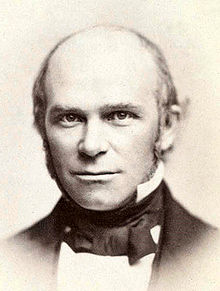
Sylvester Graham


Personal Statement
Hello, my name is Sylvester Graham. Yes, just like the crackers (probably because I did invent them). But before I had created this source of high nutritional value, I was born on the 5th of July in the year 1794 in West Suffield, CT. My father was a clergyman at 72 years of age when I was born as his 17th child, then he shortly died while I was a toddler. This could’ve been the start of my mother’s emotional and mental trauma. I was sent to live in various households because of her instability, I sought out different vocations but I turned to following my father’s footsteps, I joined the ministry, becoming a Presbyterian clergyman. I had entered Amherst College in 1823 but I failed to graduate. Around this time, I had married a woman named Sarah Earl then I joined the Pennsylvania Temperance Society. I had a following called The Grahamites, they supported my nutritional and sexual views. However, even if I did have a good amount of followers, I still received harsh criticism from the media, butchers, and commercial bakers.

Issues
I took after William Metcafe’s ideas of vegetarianism and abstinence. I concerned myself greatly with the Dietary Reform of the Antebellum of the United States, and argued that chemical additives within bread was unwholesome. Use of alum and chlorine to whiten bread though was a common practice among bakeries, causing commercial bakers to hate me. In regards to abstinence, the public and the media thought I was unbecoming of a minister because I spoke so freely about sexual ideas. Some even claim that women have fainted during my lectures because of my opinions on corsets.

Solutions
I believe that an unhealthy diet could lead to increased libido. Therefore, having good nutritional values would lead one to a healthy life free of sexual constraints. Although a lot of people criticized me for my opinions and how I aired them, I stand firmly by them. In fact, I had to leave ministering to pursue being an in-demand lecturer. I had a lot of ideal lifestyles, such as: taking frequent showers in cold clean water, hard mattresses, vigorous exercise, and loose clothing. I was highly in favor of temperance; however, I was often overworked to the point that I had to retire lecturing in 1839 then worked as a writer struggling with emotional and mental issues, similar to my mother. But even with these obstacles, I managed to co-found the American Vegetarian Society in 1850, and published “Lectures on the the Science of Human Life” and “Lectures to Young Men on Chastity”. In the process, I had influenced a lot of people and their nutritional views, one notable figure being John Harvey Kellogg, a man who was later to be known for his breakfast cereals.

Relationships With Others
I had heard that Mary Cheney was an advocate of Graham’s Diet (avoiding meat, alcohol, and spices), so I think it would be interesting to sit next to her (supposedly oppressive) husband, Horace Greeley. I think it would be lovely to sit next to Mother Ann Lee because of our common protest against sexual relations. I would hate to be seated next to Ralph Waldo Emerson because he mocked me in one of his editorials calling me the “poet of bran and pumpkins”.

Brigham Young

Personal Statement:
My name is Brigham Young. I was born in 1801 to a farming family in Vermont. My parents were John and Abigail Young, and I am the ninth of eleven children. When I was young I moved to New York with my parents, but when I was sixteen I left home to start my career. I didn't have much of a formal education. I learned many of my skills while being apprenticed as a carpenter and painter. I married my first wife, Miriam Works, when I was 23 years old. I was a Methodist for many years, but I converted to Mormonism in 1832 after reading the Book of Mormon. After meeting Joseph Smith, the leader of the Mormons, I was even more encouraged to follow this religion. In 1838 I went to Missouri to help the Mormons there in their move to Illinois. I also traveled to England in order to spread my religion even further. In 1941 I became the President of the Quorum of Twelve Apostles and I devoted myself to promoting my religion and bettering the lives of its followers.


Issue(s):
I was involved in what I think was a very important religious, economic, and political issue. Because Mormons were not a majority during the time I was alive they were criticized by many people. I wanted all Mormons to have the ability to express their religion freely and without being oppressed by others. I wanted to expand my church and to seek out new members and to better the lives of existing members. I hoped to expand my religion by providing a variety of opportunities and incentives to these new members.


Solution(s):
In 1851 I became the governor of Utah, and I worked to pass laws which would give Mormons more freedom. One of the things I approved of was polygamy. Having had 55 wives, this was something I supported. Other people in power did not approve of this idea, saying that I was not allowing for a separation of church and state. I was also in favor of having women’s suffrage in Utah because by increasing the amount of people who could vote, the chances of voting in favor of a Mormon increased. In order to expand Mormonism, I also encouraged believers to emigrate and build their own settlements. I encouraged and often helped these migrations of people who were ready to start new lives with the Mormon religion. By supporting small businesses and the manufacturing of local products, I helped my people become more self- sufficient. I didn't receive a good education as a child, so I did everything I could to provide and education to Mormons. I established the University of Deseret, which was later named Brigham Young University.


Relationship to Others:
During the dinner party, I would be most comfortable sitting next to someone who shares my beliefs. I would be most comfortable sitting next to Joseph Smith because he was the founder of Mormonism and the one who inspired me to convert. I would feel least comfortable sitting next to Lyman Beecher because he is a Protestant and I am a Mormon


Joseph Smith


Personal Statement: I was born on December 23, 1805 in Sharon, Vermont. I was deprived of the benefit of formal education. I received limited instruction in reading, writing, and basic arithmetic. I founded the Latter Day Saint movement also known as Mormonism. Mormonism was an American made religion designed to spread its influence worldwide. I published the Book of Mormon at age 24 and attracted tens of thousands of followers during the Second Great Awakening. I also ran for president in 1844.


Issues: I was concerned with the issue of religion in my time. I reformed religion by creating Mormonism. I also was an abolitionist, believing that blacks are not inferior to whites. I welcomed everyone into my church, freemen as well as slaves. I proposed abolishing slavery during my presidential campaign in 1844. I am motivated on these issues by the word of God.


Solutions: Although I proposed abolitionist legislation, my solution to the religious crisis is individual moral reform through God and Mormonism. I was successful in this reform through spreading the word of Mormonism and turning it into a famous and recognized religion. I was able to change people’s opinions through my religion. However, I was not an entirely successful abolitionist since my proposed legislation did not go through. However, I did help by allowing slaves to be Mormons. I was criticized during my fight for reform for being a polygamist.

Relationship to Others:  I would feel comfortable sitting next to Brigham Young because he is a Mormon and my successor. I would also like to sit next to David Walker or Frederick Douglas because they were abolitionists who believed in equality. I would not feel comfortable sitting next to Mother Ann Lee and Angelina Grimke because they were Quakers.

Theodore Parker

Theodore Parker

Personal Statement:


Hello, my name is Theodore Parker. I was born on August 24, 1810 in Lexington, Massachusetts. I did not have much of an education growing up, but I eagerly educated myself. In 1830, I passed Harvard’s entrance examination; however, I did not have enough money to enroll. So, I opened my own school in Watertown, Massachusetts and saved up some money. Then in 1834, I enrolled in and attended the Harvard Divinity School. I am an advocate of transcendentalism and a vocal abolitionist. I made a unique brand of transcendental theology and social activism that was different from the orthodox Congregational Church. As a Transcendentalist preacher, I believe in the inherent goodness of both people and nature. In my teachings, I encourage people to experience God individually and personally. As a part of the Abolitionist Movement, I also opposed the Fugitive Slave Act and supported John Brown’s Harpers Ferry raid.


Issues:
I am involved in the issue over slavery and issues within the orthodox bounds of the Congregational Church. I have worked to abolish slavery, and I advocate transcendentalism. My main motivation is religious.


Solutions:
I believe legislation should be made to abolish slavery. I have been successful in influencing many people and spreading my ideas. Thousands of people have come to hear my sermons. I also went on lecture tours and sometimes made 100 appearances in a year. My work against slavery has been somewhat successful. In opposition to the Fugitive Slave Act, my followers and I created the Committee of Vigilance, which helped hide fugitive slaves in Boston. I raised money and supported Brown’s Harpers Ferry raid in 1859, and even though the raid did not succeed, I believe it will inspire other larger slave rebellions. My biggest obstacle has been the South’s stubborn desire to keep slavery.


Relationship to Others:
As well as being for abolition and transcendentalism, I am also in favor of many other reforms. I am a supporter of women’s rights and endorse women’s suffrage. I also want better schools and universal education. I am also in favor of temperance. In addition, I urge that the criminal justice system reform criminals, not punish them. I support utopian communities. I support Brook Farm, a New England utopian community founded by my good friend George Ripley.  

I would be comfortable talking with Frederick Douglas, Henry Thoreau, David Walker, Adin Ballou, Wendell Phillips, and Harriet Tubman because they all shared my views on the abolition of slavery.
I’d be uncomfortable talking with Andrew Jackson and John C. Calhoun because they both supported slavery.

Brigham Young

Personal Statement:

My name is Brigham Young. I was born to a farming family in Whitingham, Vermont on June 1st, 1801. My family was very poor and I was the ninth of eleven children. When I was three, my parents decided our family would be better off if we moved to upstate New York. I never received a formal education as I was busy helping my father with farming and other things, such as carpentry. When I was sixteen I left home to start my own career as a carpenter, painter, farmer, and general handyman. I married at age 23 and my wife and I moved to Mendon, New York where Joseph Smith was preparing the Book of Mormon for publication. Although I had just converted to Methodism in 1823, I was drawn toward Joseph Smith's religion of Jesus Christ of Latter-day Saints. The Mormon religion drew me in so much that I ended up being baptized into the Mormon church in 1830. In 1833 after the death of my first wife, I decided to follow Joseph Smith and his followers to Kirtland, Ohio. After Smith was murdered in 1844, I helped move the Mormons to Utah, hoping that here we would find the freedom to worship our faith. I became the governor of Utah and I took over Smith's authority, becoming president of the Mormon Church and there I spent the rest of my life in service to the Mormon faith.


Issues:
Us Mormons suffered many issues and we were persecuted by many people. Our leader, Joseph Smith, was murdered because others views' towards our faith. We moved to Utah to find freedom to worship our faith but we experienced many other issues such as:

  • persecution by many other religions,even those who believed in Christ like us
  • anti-Mormon mobs (tried to hurt our believers)
  • our church was not united enough
  • those who were more educated than us looked down on our church
  • alcoholism (huge problem, drinking only caused problems to families and families should be united)
  • the "outsiders" (influenced our people in a negative way, therefore causing our church to not be united)
  • assimilating to the Utah territory and learning how to live in the desert was very challenging at first
  • not enough supporters, our Church was not big enough to support itself against the outsiders
No matter what issues our Church faced, we always remained strong. When we arrived to Utah, we started forming our very own "Garden of Eden", our perfect society just for Mormons. The Lord asked Joseph Smith to help him reform Christianity and all us Mormons would devote our lives for the Lord and we did everything possible to keep our Church alive and to spread our faith onto all the others who are not apart of our Church yet.


Solutions:

We found solutions to get rid of the all the flaws in our Church, letting us come closer to our goal of creating a perfect Mormon society, our very own "Garden of Eden". Here are our solutions:


  • in order to avoid persecution by others and to avoid anti-Mormon mobs, we moved out to the vast desert of Utah in order to find a place where we could worship freely, without any judgement from others
  • since our Church was not united enough, I expanded the roles and responsibilities of our believers in order to unite them. I developed a new government which I was the governor of and established laws that my people had to follow
  • the only way to fix the problem that those who were more educated than us, was to become more educated than them. We established high education and made schools and colleges like the University of the Desert. Even now, the Brigham Young University exists named in my honor because of my influence towards education.
  • to deal with the problem of alcohol that only lead to impurity in our society, we got rid off all alcoholic substances and things that could get people drunk to prevent the negative effects of alcohol
  • we united against outsiders and we supported the doctrine of polygamy, or plural marriages, and this way we would marry in our community and not have to assimilate to others views while looking to start a family
  • to deal with living in the desert, we found irrigation canals to get water and we gradually assimilated to this different life style
  • to gain more supporters, we established Mormon communities in the neighboring areas of Arizona, Nevada, and Ohio. We also sent missionaries to places just as Canada to get the word of the Lord out and to spread our faith, which caused our Church to successfully grow
Us Mormons were successful in spreading our faith and dealing with our issues, besides the issue of the Federal Government. This so called "Mormon War" occurred when I fought the government by cutting off its troops supply line rather than fighting a battle. We also found a solution to this problem and by 1858, I reached a compromise with the government and we were allowed to practice our religion and building our community without interference. 

Relationship to Others:


Temperance: Us Mormons don't believe in the usage of alcohol. Alcohol only leads to drunkenness, which only leads to problems. Drunkenness causes problems with family and causes family fights, which we are against as family should be united. We are working to remove all the alcohol from our society along with anything that can intoxicate a man.
Abolition: Blacks must first become pure to be included in the Church. Blacks are not apart of the Church because the Lord doesn't want them to be a part of the Church until they achieve purity and in my eyes slavery should not be abolished as the blacks are impure.
Women's Rights: Us Mormons want our society to be perfect and we are working to create our own "Garden of Eden." The Bible Story of the Garden of Eden shows how the men comes first and the women comes second, meaning men are above women.
Education: We value high education and want the Mormons to be educated and to keep spreading our beliefs and faith, therefore we established the University of the Desert.
Utopian Communities: Us Mormons ourselves are trying to create our very own "Garden of Eden" and a perfect society where we can freely worship and we believe others should do so as well.

I could sit next to John Calhoun as we are both pro slavery, or Josephine Dodger who is against Women Suffrage. However I would not like to sit next to Susan B. Anthony as she is for women suffrage or Angelina Grimke as she is fighting for abolition and I believe that blacks should remain slaves.


Mother Ann Lee

Personal Statement : Hello, my name is ‘Mother’ Ann Lee and I was born on February 29, 1736 in Manchester, United Kingdom. I didn’t get a formal education and never learned how to read or write because I was sent to work early in a cotton factory along with my brothers and sisters. In 1758 I joined a society called the Shaking Quakers, or Shakers. We worshipped an open confession of sin, and the second appearance of Christ. I had a revelation that I was the second coming of Christ or the female counterpart of Christ. After marrying a Shaker, Abraham Standerin, I became obsessed with a morbid repugnance toward marriage and a conviction of the sin of sexual relations which caused my great mental suffering. In 1770, I was acknowledged by the society of Shakers as their leader and thereafter called Ann the Word, and Mother Ann. I began to "speak with tongues" and to preach openly against marriage and sexual intercourse. 
Issues : An obstacle that I faced was that my  group (the Shakers) were persecuted because our beliefs were different from mainstream Christian ideology. Because we preached against war and would not bear arms or take oaths, we were accused of pro-British sympathies and secret correspondence. My group were pacifists,and we did not side with either the British or the colonists ; I was neutral during the American Revolution. In July 1780, me and my followers were arrested by the Albany County Commissioners for Detecting Conspiracy and imprisoned on charges of high treason, but I was released. However, to the mainstream, I was still thought of as too radical and as a result of that I encountered violent mobs.
Solutions: To escape the persecution and to find a place where our religion could take root, me and a small group of eight others, including my brother, niece, and husband, sailed to America in 1774. We established a communal farm in Watervliet, New York. In the summer of 1776 I joined the Shaker group near Albany. Here for three and a half years we lived together and held our religious meetings. I continued to have visions and revelations concerning the conduct of the "Church." My followers called themselves "the first witnesses of the Gospel of Christ's Second Appearing". I was regarded as the second appearance of Christ, Jesus having been the first, and we were both necessary for the complete revelation of the Father-Mother God. In May 1781 me and some of my followers started on a tour through New England where there were scattered groups of Shakers. I gave practical messages and encouraged simple honesty, frugality, and industry; urging people to "put your hands to work, and give your hearts to God." I returned to Watervliet in July 1783 and died there in September of 1784. My followers believed that I embodied all the perfections of God in female form ; that I was Christ’s female counterpart. I preached that sinfulness could be avoided by not treating men and women equally, and by keeping them separated in order to prevent any sort of temptation leading to impure acts. I preached that celibacy and confession of sin were essential for salvation. My mission throughout New England was especially successful in converting groups who were already outside of the mainstream of New England Protestantism, including followers of Shadrack Ireland.
Relationships to Others: I would feel uncomfortable sitting next to Lucretia Mott and Angelina Grimke, and I would feel comfortable sitting next to Charles Grandison Finney and Lyman Beecher.