Showing posts with label Education. Show all posts

Tuesday, November 12, 2013

Dorothea Dix


Personal Statement: Hello, my name is Dorothea Lynde Dix. I was born on April 4, 1802 in Hampden, Maine. I shared a small cottage with my parents and two younger brothers. My father, Joseph Dix, is a religious fanatic and a minister. Because my family is quite poor, I traveled to Boston to live with my grandparents, and then with my aunt in Worcester, Massachusetts. I began my teaching career at age fourteen, in my own home. Three years later in 1819, I founded the first school for girls with a charity school that young poor girls can attend for free. I spent my days teaching in the morning, and reading and writing throughout the evening and night. My most famous work is a textbook that goes by the name of "Conversations of the Common Things", published in 1824. In 1827, I was diagnosed with tuberculosis. I went on a retreat in the fall of 1830, and when I returned I continued teaching followed by taking care of my ill grandmother. I was so overwhelmed that I collapsed and lost the use of one of my lungs. Then, I moved to Liverpool, England for eighteen months in hope of a recovery. In England, I learned of two very important men that inspired me to investigate the dangerous situation of the insane in the United States. Their names were Philippe Pinel and William Tuke. After my grandmother passed in 1837, I received an inheritance that freed me from working as a teacher. I regained my strength and visited a jail in East Cambridge, Massachusetts. They led to to these filthy jail cells that were occupied with a number of mentally ill women. Shocked by this, I visited another 500 towns with the results of finding more mistreated mentally ill women. I was enraged. 

Issues: I was an american activist that believed that the mentally ill should not be mistreated. I strongly believed that they could be cured and helped and I took a large part in mental health reform and education. Also, I was trying to enforce the idea of equality for women as much as I possibly could.

Solutions: To solve this issue, I created schools and the first mental asylums. I wrote many memorials to state legislatures, demanding to protect my suffering gender. My petition was passed and a bill which provided funds for the mentally ill at the Worcester State Hospital. I extended this and brought this issue to the federal courts. Congress denied my requests. I wanted to begin a new project that proposed that revenue collected from the sale of public land to be used to establish a federal fund for the mentally ill, blind, deaf, and mute across the nation. They disregarded my requests until 1854, after I described all of the disturbing things I saw at the jails. My bill was vetoed but my determination did not end there. I was not being heard loud enough. My determination led me to form institutions and asylums that treated the mentally ill with proper care in North America and Europe.

Relationship to others: At the dinner party I would be most comfortable talking to women rights activists such as Catherine Beecher, Margaret Fuller, and Angelina Grimke. Also I would like to sit with people who are interested in education reform. I would not feel comfortable sitting next to Susan B. Anthony because she is a feminist.

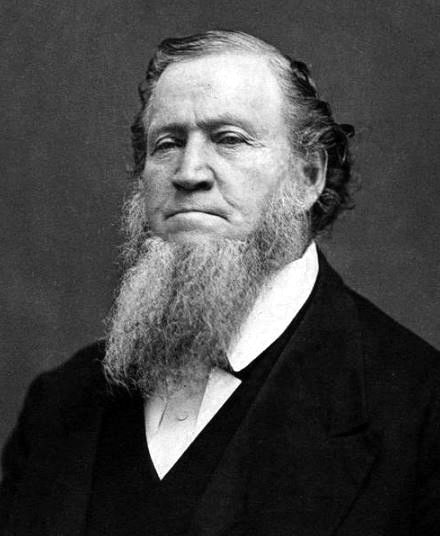
Brigham Young


Personal Statement
  • Born on June 1, 1801 in the city of Whitingham, VT.
  • Formal education was minimal, was apprenticed to be a carpenter, painter, and glazier.
  • American leader in the LDS movement, president of the LDS church, and governor of the Utah territory. Led foundings of the precursors to the University of Utah and Brigham Young University.
  • Built many temples around the United States, expanded Mormonism, and helped settle much of the American Midwest.
Issue(s)
  • Brigham Young was involved in the issue on Mormonism, and to be more specific Mormon polygamy.
  • Brigham Young was all for Mormon polygamy as he practiced the belief himself.
  • The source of Young’s motivation was mostly religious as the issue had to do, well, with religion.
  • Fought for the freedom of practicing Mormon religion and setting up their churches.
  • Lack of purification of the Mormon church and religion (in his opinion).
Solution(s)
  • Blacks in the Mormon religion were treated as equals until Brigham Young. He announced a priesthood ban which prohibited all men of black African descent from holding the priesthood. He did this to purify the Mormon religion as “ if the white man who belongs to the chosen seed mixes his blood with the seed of Cain, the penalty, under the law of God, is death on the spot. This will always be so”( Brigham Young). He believed in this so he set out to ban all blacks to purify the religion.
  • Brigham Young was successful in banning blacks from priesthood up until 1978(which obviously happened after he died). In 1978 the new president of the church, Spencer W. Kimball, allowed blacks to enter priesthood again. He did not want to change anyone’s point of view, just purify the Mormon church as he wanted it to be.
  • As Brigham Young did live at a time where racism and slavery existed, no one really contradicted him or gave him any criticisms on his first issue of purifying the church. He just got away with what he wanted to do, and it lasted 130 years without anyone doing anything about it.
  • He took charge of the Mormon exodus in Illinois in the wake of the Church’s expulsion from Missouri.
Relationship to others
  • Brigham Young had a strong connection with the issue on education. As he believed that all ( Probably meant white men) should be educated he led foundings to two schools. One of which was the University of Utah, and the other, named after himself, Brigham Young University.
  • I would like to sit with Joseph Smith, as he was the founder of Mormonism and we would most likely get along and have an engaging conversation. I would not like to sit with a Quaker, an example of which would be Angelina Grimke.
Sidenote
Brigham Young was a decent businessmen as he engaged in a variety of enterprises, some of which included transportation and manufacturing. By the time of his death, his personal fortune was calculated at $600,000 making him the most successful Utah businessman up to that time.

Monday, November 11, 2013

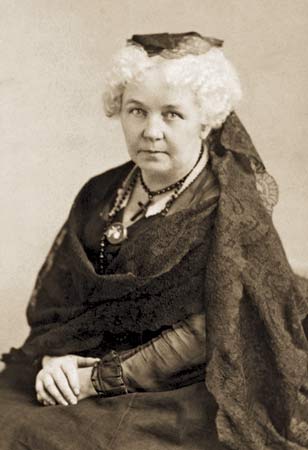
Elizabeth Cady Stanton

                                                 
File:Elizabeth Stanton.jpg

Personal Statement :
 Hello, my name is Elizabeth Cady Stanton and I was born on November 12, 1815, in Johnstown, New York. I attended Johnstown Academy, where I studied Latin, Greek, mathematics, religion, science, French, and writing until the age of 16. After graduating the academy, I went on to Union College, as my older brother, Eleazar, had done previously. I am the daughter of a lawyer who made no secret of his preference for another son. That is the reason for my desire to study and be equal as all the other males. I graduated from the Emma Willard's Troy Female Seminary in 1832 and I am drawn to the abolitionist, temperance, and women's rights movements through visits to the home of my cousin, the reformer Gerrit Smith. I believed in the expansion of the Fifteenth Amendment which includes voting rights for all women, this amendment also passed, as it was originally written, in 1870. I am also the author of the "Declaration of Rights and Sentiments" which granted rights to women and African Americans. 

Issue(s) :  

With Lucretia Mott and several other women, I held the Seneca Falls Convention in July 1848. At this meeting, we prepared the “Declaration of Sentiments” and took the lead in proposing that women be granted the right to vote. This declaration proposed grand movement for attaining the civil, social, political, and religious rights of women. Together with Susan B. Anthony, we declined to support passage of the Fourteenth and Fifteenth Amendments to the United States Constitution. I opposed giving added legal protection and voting rights to African American men while women, black and white, were denied those same rights. I authored both The Woman's Bible and her autobiography, along with many articles and pamphlets concerning female suffrage and women's rights. During the Civil War I concentrated my efforts on abolishing African American rights, but afterwards I became even more successful in promoting women suffrage. In 1868, I worked with Susan B. Anthony on the Revolution, a militant weekly paper. We then formed the National Woman Suffrage Association (NWSA) in 1869. I was the NWSA’s first president - a position I held until 1890. The organization then merged with another suffrage group to form the National American Woman Suffrage Association. I served as the president of the new organization for two years. My stance on the issue with women and slave rights is that the prejudice against color, of which we hear so much, is no stronger than that against sex. It is produced by the same cause, and manifested very much in the same way. My source of motivation is organized Christianity, which relegated women to an unacceptable position in society.

Solution(s) :
My solutions to the unfair rights to women and African Americans was traveling to give lectures and speeches. I called for an amendment to the U.S. Constitution giving women the right to vote. I also worked with Anthony on the first three volumes of the History of Woman Suffrage (1881–6). With my daughter, Harriet Stanton Blatch, we published a critique, The Woman's Bible, which was published in two volumes. The first volume appeared in 1895 and the second in 1898. This brought considerable protest not only from expected religious quarters but from many in the woman suffrage movement.  

Relationship to Others: 
I am passionate about women's rights and equality, so I would feel comfortable sitting next to someone with a related  opinion. I would also be comfortable sitting next to atavists with religious leanings supporting divorce rights, employment rights, and property rights for women. I believe fundamental sexism is part of organized Christianity. On the other hand, I would feel very uncomfortable sitting next to someone who would deny any rights to women and African Americans. Someone who believes women should obey the man and neglects women capability.         


Margaret Fuller

Personal Statement:
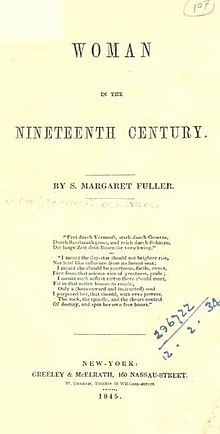
  • My name is Margaret Fuller, and I was born on May 23, 1810 in Cambridge, Massachusetts. At a young age, my father, determined to give me a proper “boys education”, began teaching me how to read and write and continued to be my teacher until he got elected as a representative in Congress in 1817. I began my formal education at the Port School in Cambridge in 1819, and then continued my education at the Boston Lyceum for Young Ladies from 1821 to 1822. To fulfil my aunts and uncles wishes, I attended the School for Young Ladies in Groton for two years, until I realized I did not fit in with young woman my age and decided to go home at the age of 16 and teach myself. Early on in life I realized that the one thing I loved to do was read. I earned my reputation as best-read person, male or female, in New England, and was the first woman allowed to use the library at Harvard College. I delivered private lessons, and made my keep through journalism and translation. In November of 1839, I began overseeing what I like to call “conversations” with local woman in Boston, centered to make up for lack of women's education with discussions and debates on specific topics. I sought to answer great questions facing womankind, and had significant figures from the women’s rights movements attend my conversations. I was known as an important figure in the transcendental movement, due to my job as the editor of Ralph Waldo Emerson’s The Dial. Soon after, I wrote the first book on American feminism named Woman in the Nineteenth Century. I became a well known literary critic and the first full time book-reviewer in American Journalism.

Issue:
  • I was a very strong proponent of feminism and women's rights. The source of my motivation, mainly, was women's education and right to employment. I believe that woman should be provided a proper education and equal political rights. They should also be able to seek any type of employment they want and not succumb to the “feminine” roles, such as caregiver or teacher.
Solution:
  • Giving my best effort to support feminism and help the woman in my country achieve a better lifestyle, I started overseeing what I like to call “conversations” with woman in my community. These conversations were focused on making up for the lack of education among women by discussing and debating on a wide variety of topics. In these meeting, I wanted to answer the great questions facing womankind and help them get a better future.
  • I have been very successful in spreading my opinion and knowledge on this topic. The “conversations” helped women achieve a more well rounded education on certain topics, and I also was a great literary critic and book-reviewer, so I got to show the world my opinion on my favorite topics. Aside from being a reviewer and journalist, I also wrote the first book on American Feminism and set a trend for many women's activists to come.
  • While trying to spread my knowledge and position on this certain topic, I faced many challenges. From being taught a “boys education” from my father, my father's death making my abandon many of my ideas in order to travel back home and care for my family, poor salary, and physical sickness among others.

Relationship to others:
Comfortable- Susan B Anthony, Elizabeth Cady Stanton, Ralph Waldo Emerson, Horace Greeley.


Not Comfortable- Anyone who opposed feminism and transcendentalism

Brigham Young

Personal Statement:
My name is Brigham Young. I was born in 1801 to a farming family in Vermont. My parents were John and Abigail Young, and I am the ninth of eleven children. When I was young I moved to New York with my parents, but when I was sixteen I left home to start my career. I didn't have much of a formal education. I learned many of my skills while being apprenticed as a carpenter and painter. I married my first wife, Miriam Works, when I was 23 years old. I was a Methodist for many years, but I converted to Mormonism in 1832 after reading the Book of Mormon. After meeting Joseph Smith, the leader of the Mormons, I was even more encouraged to follow this religion. In 1838 I went to Missouri to help the Mormons there in their move to Illinois. I also traveled to England in order to spread my religion even further. In 1941 I became the President of the Quorum of Twelve Apostles and I devoted myself to promoting my religion and bettering the lives of its followers.


Issue(s):
I was involved in what I think was a very important religious, economic, and political issue. Because Mormons were not a majority during the time I was alive they were criticized by many people. I wanted all Mormons to have the ability to express their religion freely and without being oppressed by others. I wanted to expand my church and to seek out new members and to better the lives of existing members. I hoped to expand my religion by providing a variety of opportunities and incentives to these new members.


Solution(s):
In 1851 I became the governor of Utah, and I worked to pass laws which would give Mormons more freedom. One of the things I approved of was polygamy. Having had 55 wives, this was something I supported. Other people in power did not approve of this idea, saying that I was not allowing for a separation of church and state. I was also in favor of having women’s suffrage in Utah because by increasing the amount of people who could vote, the chances of voting in favor of a Mormon increased. In order to expand Mormonism, I also encouraged believers to emigrate and build their own settlements. I encouraged and often helped these migrations of people who were ready to start new lives with the Mormon religion. By supporting small businesses and the manufacturing of local products, I helped my people become more self- sufficient. I didn't receive a good education as a child, so I did everything I could to provide and education to Mormons. I established the University of Deseret, which was later named Brigham Young University.


Relationship to Others:
During the dinner party, I would be most comfortable sitting next to someone who shares my beliefs. I would be most comfortable sitting next to Joseph Smith because he was the founder of Mormonism and the one who inspired me to convert. I would feel least comfortable sitting next to Lyman Beecher because he is a Protestant and I am a Mormon


Brigham Young

Personal Statement:

My name is Brigham Young. I was born to a farming family in Whitingham, Vermont on June 1st, 1801. My family was very poor and I was the ninth of eleven children. When I was three, my parents decided our family would be better off if we moved to upstate New York. I never received a formal education as I was busy helping my father with farming and other things, such as carpentry. When I was sixteen I left home to start my own career as a carpenter, painter, farmer, and general handyman. I married at age 23 and my wife and I moved to Mendon, New York where Joseph Smith was preparing the Book of Mormon for publication. Although I had just converted to Methodism in 1823, I was drawn toward Joseph Smith's religion of Jesus Christ of Latter-day Saints. The Mormon religion drew me in so much that I ended up being baptized into the Mormon church in 1830. In 1833 after the death of my first wife, I decided to follow Joseph Smith and his followers to Kirtland, Ohio. After Smith was murdered in 1844, I helped move the Mormons to Utah, hoping that here we would find the freedom to worship our faith. I became the governor of Utah and I took over Smith's authority, becoming president of the Mormon Church and there I spent the rest of my life in service to the Mormon faith.


Issues:
Us Mormons suffered many issues and we were persecuted by many people. Our leader, Joseph Smith, was murdered because others views' towards our faith. We moved to Utah to find freedom to worship our faith but we experienced many other issues such as:

  • persecution by many other religions,even those who believed in Christ like us
  • anti-Mormon mobs (tried to hurt our believers)
  • our church was not united enough
  • those who were more educated than us looked down on our church
  • alcoholism (huge problem, drinking only caused problems to families and families should be united)
  • the "outsiders" (influenced our people in a negative way, therefore causing our church to not be united)
  • assimilating to the Utah territory and learning how to live in the desert was very challenging at first
  • not enough supporters, our Church was not big enough to support itself against the outsiders
No matter what issues our Church faced, we always remained strong. When we arrived to Utah, we started forming our very own "Garden of Eden", our perfect society just for Mormons. The Lord asked Joseph Smith to help him reform Christianity and all us Mormons would devote our lives for the Lord and we did everything possible to keep our Church alive and to spread our faith onto all the others who are not apart of our Church yet.


Solutions:

We found solutions to get rid of the all the flaws in our Church, letting us come closer to our goal of creating a perfect Mormon society, our very own "Garden of Eden". Here are our solutions:


  • in order to avoid persecution by others and to avoid anti-Mormon mobs, we moved out to the vast desert of Utah in order to find a place where we could worship freely, without any judgement from others
  • since our Church was not united enough, I expanded the roles and responsibilities of our believers in order to unite them. I developed a new government which I was the governor of and established laws that my people had to follow
  • the only way to fix the problem that those who were more educated than us, was to become more educated than them. We established high education and made schools and colleges like the University of the Desert. Even now, the Brigham Young University exists named in my honor because of my influence towards education.
  • to deal with the problem of alcohol that only lead to impurity in our society, we got rid off all alcoholic substances and things that could get people drunk to prevent the negative effects of alcohol
  • we united against outsiders and we supported the doctrine of polygamy, or plural marriages, and this way we would marry in our community and not have to assimilate to others views while looking to start a family
  • to deal with living in the desert, we found irrigation canals to get water and we gradually assimilated to this different life style
  • to gain more supporters, we established Mormon communities in the neighboring areas of Arizona, Nevada, and Ohio. We also sent missionaries to places just as Canada to get the word of the Lord out and to spread our faith, which caused our Church to successfully grow
Us Mormons were successful in spreading our faith and dealing with our issues, besides the issue of the Federal Government. This so called "Mormon War" occurred when I fought the government by cutting off its troops supply line rather than fighting a battle. We also found a solution to this problem and by 1858, I reached a compromise with the government and we were allowed to practice our religion and building our community without interference. 

Relationship to Others:


Temperance: Us Mormons don't believe in the usage of alcohol. Alcohol only leads to drunkenness, which only leads to problems. Drunkenness causes problems with family and causes family fights, which we are against as family should be united. We are working to remove all the alcohol from our society along with anything that can intoxicate a man.
Abolition: Blacks must first become pure to be included in the Church. Blacks are not apart of the Church because the Lord doesn't want them to be a part of the Church until they achieve purity and in my eyes slavery should not be abolished as the blacks are impure.
Women's Rights: Us Mormons want our society to be perfect and we are working to create our own "Garden of Eden." The Bible Story of the Garden of Eden shows how the men comes first and the women comes second, meaning men are above women.
Education: We value high education and want the Mormons to be educated and to keep spreading our beliefs and faith, therefore we established the University of the Desert.
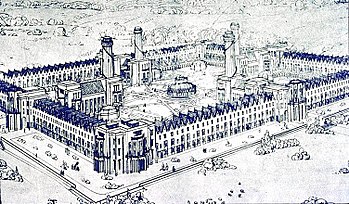
Utopian Communities: Us Mormons ourselves are trying to create our very own "Garden of Eden" and a perfect society where we can freely worship and we believe others should do so as well.

I could sit next to John Calhoun as we are both pro slavery, or Josephine Dodger who is against Women Suffrage. However I would not like to sit next to Susan B. Anthony as she is for women suffrage or Angelina Grimke as she is fighting for abolition and I believe that blacks should remain slaves.


Angelina Grimke


Personal Statement: My name is Angelina Emily Grimké and I was born on February 20, 1805 in Charleston, South Carolina. I am the daughter of a wealthy slave owner and a judge and I am the youngest out of 14 children. I was educated at home but neither my sister nor I were satisfied with our education and the limitation on it. After my family refused to discuss slavery with me, my sister and I moved out of Charleston. I am most notable for my written letter to the abolitionist leader William Lloyd Garrison where I denounced a recent mob attack on him in Boston and stated my sympathy. I’m also notable for my tract An Appeal to the Christian Women of the South which widely circulated the north as the first antislavery piece written by a southern woman. I am political activist, supporter of the woman's suffrage act and a abolitionist. My sister and I share a lot of the same ideas regarding slavery and women’s right and we've worked together to achieve some of these goals regarding these issues.


Issue(s): Growing up, I began to realize that my rights, as well as other, were limited. Women and blacks were a minority in my society. Disagreeing with the way people’s actions and beliefs, my sister and I decided to move to Pennsylvania and join the Quaker family. There we occupied themselves with charitable and religious work while gradually moving closer to the antislavery movement. I joined the Philadelphia Female Anti-Slavery Society in 1835. Later that year, my letter to the abolitionist leader William Lloyd Garrison got published on The Liberator. In 1836 my pamphlet circulated the North. It was titled An Appeal to the Christian Women of the South which encouraged women to help end the slavery in the South. I am a strong supporter of the minority and believe that they should have the same rights and equal opportunities as the rest of the society.


Solution(s): I wanted to spread my ideas to the rest of the society and have other people see what my sister and I see. I began to speak before small groups of women in New York City. As the time went on, those groups also included men and more and more people began listening to me. We’ve been attacked by the press and the clergy but we have defended our right as women to speak in public. My sister and I are known as pioneers in the women’s rights movement. I believe there should be equality in race and in gender and many people, including my husband and sister as well as many others, agree with me in this cause.

Relationship to Others: I left the south because of their ideas regarding slavery. I believe in equality and they did not. Most of my ideas did not match up with theirs but in my life I've been a part of many groups. I would get along with anyone that has the same beliefs as me. Someone who is against slavery and believes in equal rights just like me. I feel the most important reforms that can happen are Women’s Rights, Abolition, and Education.


I

Robert Owen

Robert Owen
Personal Statement: Hello everyone, my name is Robert Owen. I was born on May 14, 1771 in Montgomeryshire, Wales in England. Although some may say that my intelligence was above average, the reality is that I did not go to school past the age of 10, when I began to work at the new textile mills. I was very fortunate because at the age of 21 I was able to climb the ranks and become the manager of a mill in England. At a very early age, I was concerned with the conditions of factory workers and with the conditions at the mill I was working in in New Lanark, England. This drove me farther and farther into what some may now call utopian socialism. The mill in New Lanark ended up being a great success because of the praise from others. I would say that my mill was one of the great mills in the nation in terms of my relationship with the workers. After this success, I decided that I wanted to create something better for the society. In the early 19th century, I began a community that I believed would be the best for the world. Unfortunately, my experiments in America and England did not work as well as I intended. In fact, none of my experiments lasted as long as I wish they could have. Nevertheless, I can say that I am an important part of England, America, and the rest of the world. I fought for many rights that weren't available to people at the time including, but not limited to, free education, better working conditions, and women’s rights. I contributed to American history because what I am fighting for was and is showing signs of improvement.
        
       Issue: The issues that I believe should be mended are important to me because I believe that, as a society, we should be more civil and have more rights. More specifically, the problems I have with society include the problem with the mills that are spreading around the world, our well being in general, and the rights of everyone in the nation. For example, should we be putting children to work so early and so long without them having enough education? Should we allow our wives and daughters to be slaves to their husbands? And should we be allowing our sons and other men to be tied to alcohol to the point where it is a danger to keep them at work? I don’t think that our society is as good as it should be. We should strive to make it exemplary so everyone can live a great life.
       Solutions: I believe that our society should follow a community of socialism where the distribution of goods can be more evenly spread throughout the nation. This is to prevent the problems facing the lower class of society. Next, the issue of education should be fixed by allowing as many children as possible have free education. The reason for this is so our children can grow up and continue to make our society better for generations to come. As for women’s rights, I don’t believe that how we are treating women should be allowed. Instead of confining the women to be “chained” to their husbands, I believe that they should be free to do more of what they wish. Similarly, I believe that all slaves should be released. We do not need slaves to further the world. As a worker of the mills in England, I have concluded that the conditions presented to the workers are unacceptable. Working for 10-12 hours is not a job, it’s suppression of the people. Finally, alcoholism is a problem that should be solved as fast as possible. Temperance should be enforced in order to make things more peaceful and productive.
       
       Relationship to Others: I would feel comfortable talking to many people at this dinner party because most of the people here are fighting for the same things I am fighting for. The person that I have met and bought land for one of the communities is here, Joann Georg Rapp and I would sit next to him for giving me the opportunity to create my experiment. I would also sit next to one of the co-founders to the American Temperance Movement, Lyman Beecher. Finally, I would probably feel comfortable sitting next to Susan B. Anthony because of her belief in the women’s movement. I would not feel comfortable sitting next to Charles Finney, Joseph Smith, and Brigham Young because I do not believe in their religions and I believe in religious toleration.

Friday, November 8, 2013

Horace Mann

Hello my name is Horace Mann and I was born on May 4, 1796 in Franklin, Massachusetts. My family were farmers and due to the constraints of our budget I was in my younger years educated for only 6 weeks of the year. But I didn't let that discourage me, instead I took initiative over my education and avidly took advantage of my local library. At the age of twenty I was able to enroll at Brown University and 3 years shortly after I was able to graduate as valedictorian of my class. I then took up law for a time taught Latin and even became a librarian at the same school of Brown University. In 1830 I decided to marry Charlotte Messer, yet sadly she died 2 years later. In 1827 I finally took my venture into the political aspect by joining the House of representatives, later in 1834 joining the senate as a member of the Whig party, and finally becoming secretary of the newly formed board of education of Massachusetts in 1848. Within that time, on 1843 I remarried to Mary Tyler Peabody . 

As a education reformist a very keen issue I had to face was creating a equal opportunity to all students. I traveled to many schools with this goal in mind and bases off of my experience came up with the solution through 6 key principals:  (1) the public should no longer remain ignorant; (2) that such education should be paid for, controlled, and sustained by an interested public; (3) that this education will be best provided in schools that embrace children from a variety of backgrounds; (4) that this education must be non-sectarian; (5) that this education must be taught by the spirit, methods, and discipline of a free society; and (6) that education should be provided by well-trained, professional teachers. 
With these key principals in mind I created the Massachusetts normal school system to better address these needs. It's a start.  
Horace Mann - Daguerreotype by Southworth & Hawes, c1850.jpgFile:Appletons' Mann Horace signature.jpg