Showing posts with label Civil Rights Activist. Show all posts
Tuesday, November 12, 2013
Dorothea Dix
Personal Statement: Hello, my name is Dorothea Lynde Dix. I was born on April 4, 1802 in Hampden, Maine. I shared a small cottage with my parents and two younger brothers. My father, Joseph Dix, is a religious fanatic and a minister. Because my family is quite poor, I traveled to Boston to live with my grandparents, and then with my aunt in Worcester, Massachusetts. I began my teaching career at age fourteen, in my own home. Three years later in 1819, I founded the first school for girls with a charity school that young poor girls can attend for free. I spent my days teaching in the morning, and reading and writing throughout the evening and night. My most famous work is a textbook that goes by the name of "Conversations of the Common Things", published in 1824. In 1827, I was diagnosed with tuberculosis. I went on a retreat in the fall of 1830, and when I returned I continued teaching followed by taking care of my ill grandmother. I was so overwhelmed that I collapsed and lost the use of one of my lungs. Then, I moved to Liverpool, England for eighteen months in hope of a recovery. In England, I learned of two very important men that inspired me to investigate the dangerous situation of the insane in the United States. Their names were Philippe Pinel and William Tuke. After my grandmother passed in 1837, I received an inheritance that freed me from working as a teacher. I regained my strength and visited a jail in East Cambridge, Massachusetts. They led to to these filthy jail cells that were occupied with a number of mentally ill women. Shocked by this, I visited another 500 towns with the results of finding more mistreated mentally ill women. I was enraged.
Issues: I was an american activist that believed that the mentally ill should not be mistreated. I strongly believed that they could be cured and helped and I took a large part in mental health reform and education. Also, I was trying to enforce the idea of equality for women as much as I possibly could.
Solutions: To solve this issue, I created schools and the first mental asylums. I wrote many memorials to state legislatures, demanding to protect my suffering gender. My petition was passed and a bill which provided funds for the mentally ill at the Worcester State Hospital. I extended this and brought this issue to the federal courts. Congress denied my requests. I wanted to begin a new project that proposed that revenue collected from the sale of public land to be used to establish a federal fund for the mentally ill, blind, deaf, and mute across the nation. They disregarded my requests until 1854, after I described all of the disturbing things I saw at the jails. My bill was vetoed but my determination did not end there. I was not being heard loud enough. My determination led me to form institutions and asylums that treated the mentally ill with proper care in North America and Europe.
Relationship to others: At the dinner party I would be most comfortable talking to women rights activists such as Catherine Beecher, Margaret Fuller, and Angelina Grimke. Also I would like to sit with people who are interested in education reform. I would not feel comfortable sitting next to Susan B. Anthony because she is a feminist.
Monday, November 11, 2013
Lydia Maria Child
Personal Statement: Hello, my name is Lydia Maria Child. I was born February 11, 1802 in Massachusetts. I had a fairly decent education at a woman’s seminary and a public school. I am most notable for my novel "Over the River and Through the Wood" and my public opinion about women's rights. I raised awareness to women inequality and publicly expressed in my novels ways to resolve the issue.
Issue(s): Growing up I realized how unfairly women and slaves were treated at an early age. In public school, boys and girls were taught in different classrooms. After the death of my mother, I was sent to Main to live with my older sister and learn to be more “feminine”. Having lived in the age of the Cult of Domesticity, being feminine and knowing my place in society was important to my family, but not much to me. At the age of 25, I married David Lee Child despite indications that he was not a correct match for me. We constantly moved around due to lack of money. My marriage was not what I had in mind, having to constantly work just to survive. Most woman in my era could not work, having to follow the Cult of Domesticity rules, but my case was different. I strongly believed that women had a place right next to man, not behind him. Many may not have agreed with me but I strongly believed that this social injustice could only be solved if the issue with slavery was resolved. I believed that both women and slaves were treated unfairly by white men with the fact that both were treated like property and had no individual rights. Garrison’s writing were my source of motivation to speak my opinion, even if it were different.
Solutions: My voice was almost always overcrowded by my husband's disapproval. I wrote a number of novels that were published and gained popularity. “An Appeal in Favor of that Class of Americans Called Africans” was one of my accomplishments. The Frugal Housewife (1829) was based upon the roles of women in her sphere within the home, and gave advice to women. It dealt with slavery and branched out to women equality. I spread my ideas and hopes with other women who too wished to be treated equally. I mostly faced criticism from my husband and those who disagreed with slavery being abolished.
Relationship to Others: I would feel most comfortable dining with Margaret Fuller and Angelina Grimké. Due to our common belief in equality and women’s right, we would most likely all get along. Seating nearby Andrew Jackson, John C. Calhoun, or Henry Clay would make me feel uncomfortable.
Robert Owen
| Robert Owen |
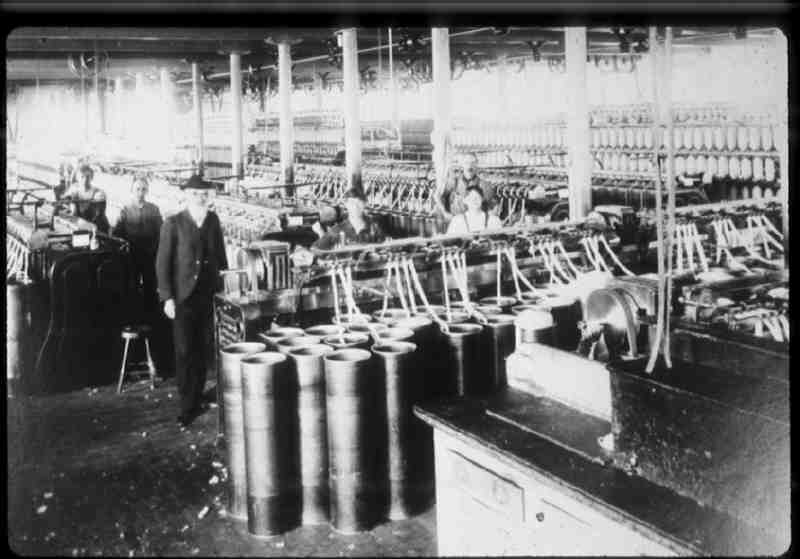
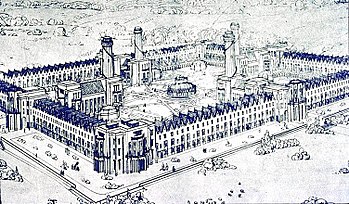
Personal Statement: Hello everyone, my name is Robert Owen. I was born on May 14, 1771 in Montgomeryshire, Wales in England. Although some may say that my intelligence was above average, the reality is that I did not go to school past the age of 10, when I began to work at the new textile mills. I was very fortunate because at the age of 21 I was able to climb the ranks and become the manager of a mill in England. At a very early age, I was concerned with the conditions of factory workers and with the conditions at the mill I was working in in New Lanark, England. This drove me farther and farther into what some may now call utopian socialism. The mill in New Lanark ended up being a great success because of the praise from others. I would say that my mill was one of the great mills in the nation in terms of my relationship with the workers. After this success, I decided that I wanted to create something better for the society. In the early 19th century, I began a community that I believed would be the best for the world. Unfortunately, my experiments in America and England did not work as well as I intended. In fact, none of my experiments lasted as long as I wish they could have. Nevertheless, I can say that I am an important part of England, America, and the rest of the world. I fought for many rights that weren't available to people at the time including, but not limited to, free education, better working conditions, and women’s rights. I contributed to American history because what I am fighting for was and is showing signs of improvement.
Issue: The issues that I believe should be mended are important to me because I believe that, as a society, we should be more civil and have more rights. More specifically, the problems I have with society include the problem with the mills that are spreading around the world, our well being in general, and the rights of everyone in the nation. For example, should we be putting children to work so early and so long without them having enough education? Should we allow our wives and daughters to be slaves to their husbands? And should we be allowing our sons and other men to be tied to alcohol to the point where it is a danger to keep them at work? I don’t think that our society is as good as it should be. We should strive to make it exemplary so everyone can live a great life.
Solutions: I believe that our society should follow a community of socialism where the distribution of goods can be more evenly spread throughout the nation. This is to prevent the problems facing the lower class of society. Next, the issue of education should be fixed by allowing as many children as possible have free education. The reason for this is so our children can grow up and continue to make our society better for generations to come. As for women’s rights, I don’t believe that how we are treating women should be allowed. Instead of confining the women to be “chained” to their husbands, I believe that they should be free to do more of what they wish. Similarly, I believe that all slaves should be released. We do not need slaves to further the world. As a worker of the mills in England, I have concluded that the conditions presented to the workers are unacceptable. Working for 10-12 hours is not a job, it’s suppression of the people. Finally, alcoholism is a problem that should be solved as fast as possible. Temperance should be enforced in order to make things more peaceful and productive.
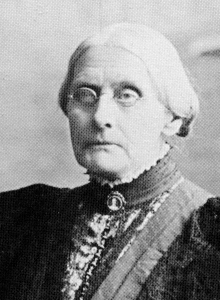
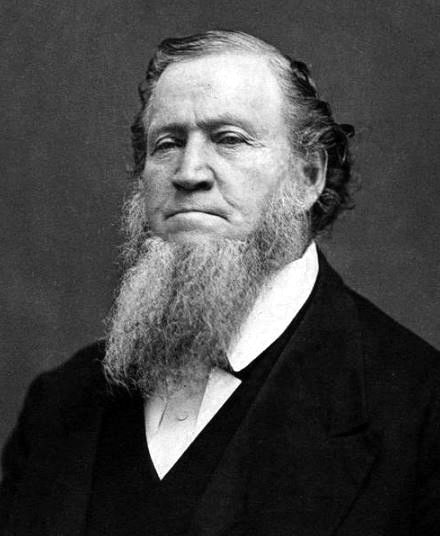
Relationship to Others: I would feel comfortable talking to many people at this dinner party because most of the people here are fighting for the same things I am fighting for. The person that I have met and bought land for one of the communities is here, Joann Georg Rapp and I would sit next to him for giving me the opportunity to create my experiment. I would also sit next to one of the co-founders to the American Temperance Movement, Lyman Beecher. Finally, I would probably feel comfortable sitting next to Susan B. Anthony because of her belief in the women’s movement. I would not feel comfortable sitting next to Charles Finney, Joseph Smith, and Brigham Young because I do not believe in their religions and I believe in religious toleration.
Harriet Tubman
Personal Statement:
My name is Harriet Tubman. I was born Armanita Harriet Ross to slave parents, Harriet Green and Ben Ross, in Dorchester County, Maryland in the 1820’s. There are no records of my birth, so I don’t quite know exactly when I was born. As a child, I took care of a younger brother and a baby, under the commands of a woman named Mary Pattison Brodess, who would beat me if I didn’t do my job right. My owners ran a large plantation near Blackwater River in Madison, Maryland, so as I grew older and stronger, I was assigned to bigger tasks in the field and forest. My mother, Rit, worked as a cook for the Brodess family, and my father, Ben, was a woodsman on the plantation. They had 9 children, including myself. However, our family struggled to stay together as slavery tore us apart. In my early life, I suffered a severe head injury when I was hit by a heavy metal weight. The injury caused seizures, narcoleptic attacks, headaches, powerful visionary, and dream experiences which occurred regularly throughout the rest of my life. Doctors believed I may have suffered from temporal lobe epilepsy, however, being a devout Christian, I liked to view my vivid dreams and visions as revelations from God. Around 1844, I married a free black man named John Tubman. Soon after the marriage was when I changed my name from Araminta to Harriet. In 1849, I became ill and my owner, Edward Brodess, unsuccessfully tried to sell me. A week later, Brodess died. Knowing we would all be sold, my brothers and I escaped from slavery on September 17, 1849. Edward’s widow, Eliza, posted a runaway notice offering a reward for each of us to be returned. My brothers managed to persuade me to return back with them. However, I managed to escape one more time with the help of the Underground Railroad. Along my way, I managed to help rescue more than 300 slaves. I took them on an exhausting and dangerous journey of nearly 90 miles, traveling by foot, northeast along the Choptank River, through Delaware and north into Pennsylvania. After I reached Philadelphia, I began thinking of my family, who still weren’t free even though I was. I began working any jobs I could find in order to save money. At this time, Congress passed the Fugitive Slave law of 1850, which forced law enforcement officials, even in states that had outlawed slavery, to aid in the capture of fugitive slaves, and imposed heavy punishments on those who aided escape. This, for us fugitive slaves, meant that we had to try to get to Canada, which had abolished slavery. That winter, I received a warning that my niece and her children were going to be sold, so I returned to my land of enslavement. They managed to escape, meeting with me so I could bring them safely to Philadelphia. In the spring, I headed back to Maryland to help rescue other family members. I began making more and more trips back to rescue all of my family members, while helping others along the way. In 1851, I returned to Dorchester County for the first time since my escape to find my husband John, who was married to another woman. I insisted they both return back with me but John refused, claiming he was happy where he was. As angry as I was, I respected his decision and instead found other slaves who wanted to escape and led them back to Philadelphia. In December of 1851, I guided 11 fugitives northward. For 11 years, I returned repeatedly to Maryland, rescuing about 300 slaves in my 19 expeditions. I also provided specific instructions for about 50-60 other fugitives to escape to the north. Despite my dangerous actions, I was never caught, and neither were the fugitives I guided. One of my last missions was to retrieve my aging parents. My father freed my mother when he purchase her from Eliza Brodess. Two years later, I received word that my father helped a group of escaped slaves and was at risk of arrest. So, I traveled to them and led them into Canada. In November 1860, I went on my last rescue mission. I was in search of my sister and her two children. Upon returning to Dorchester County, I discovered that Rachel had died, and I wasn’t able to save the children because I had no money to pay for their release. Not willing to waste my trip, I gathered another group of fugitives and we were well on our way north. I spent my remaining years in Auburn, tending to my family and others in need. I worked different jobs to support my parents and pay bills. I soon fell in love with a Civil War veteran named Nelson Davis. Even though he was 22 years younger than me, I married him in 1869 and we spent the next 20 years together. In 1874 we adopted a baby girl named Gertie.
Issue:
Along my life long journey, I stumbled upon many issues. I fought against slavery and the fugitive slave law, and fought for women’s suffrage and civil rights. In being very religious, most of my goals towards these issues came from my strong beliefs in God and the Bible.
Solutions:
Escaping slavery, I made more than 19 missions to rescue more than 300 slaves using the Underground Railroad. I returned many times to rescue my family members still enslaved, guiding dozens of other slaves to their freedom. When the South passed the Fugitive Slave Act of 1850, I helped guide fugitives farther north into Canada where slavery had been abolished. I later helped John Brown recruit men for his raid on Harpers Ferry. When the American Civil War broke out in 1861, I saw a Union victory as a key step toward the abolition of slavery. I joined a group of abolitionists heading to South Carolina. I became a fixture in the camps in Port Royal, assisting fugitives and serving as a nurse. When Lincoln passed the Emancipation Proclamation in January of 1863, I considered it an important step toward liberating blacks from slavery. I became the first woman to lead an armed assault during the Civil War. I accompanied Montgomery and his troops on an assault on a collection of plantations along the Combahee River, rescuing more than 700 slaves. For two more years, I worked for the Union forces. At the end of the war, I returned to my home in Auburn, New York. Despite my service, I had never received a regular salary and was denied compensation for years. In my later years, I worked to promote the cause of women’s suffrage. I began attending meetings of suffragist organizations, and I was soon working alongside inspirational women like Susan B. Anthony and Emily Howland. I traveled to New York, Boston, and Washington, D.C. to speak out in favor of women’s voting rights. I was a keynote speaker at the first meeting of the National Federation of Afro-American Women in 1896.
Relationships with Others:
I would feel comfortable talking with Susan B. Anthony, Lydia Child, Dorothea Dix, Lucretia Mott, Lyman Beecher, and Theodore Dwight Weld. I wouldn't feel comfortable talking to Andrew Jackson, John C. Calhoun, or Henry Clay.
Subscribe to:
Posts (Atom)