Showing posts with label Transcendentalism. Show all posts

Tuesday, November 12, 2013

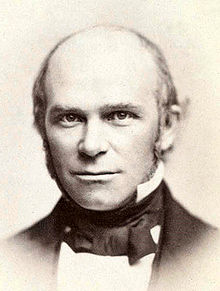
Ralph Waldo Emerson

Ralph Waldo Emerson

Personal Statement:
Hello. My name is Ralph Waldo Emerson. I was born in Boston, Massachusetts on May 25, 1803. I loved to be taught by my aunt, Mary Moody Emerson. She was by far my best teacher and had a very positive effect on my life. My father died when i was eight. I began school when i was nine and i attended Boston Latin School in 1812 and later on, in 1817, i attended Harvard College. I was named class poet in my junior year and i graduated with a rank in the middle of my class. I wasn't the best student. I later on moved to a more tropical climate and started my career as an author.
Issues:
I took part in intellectualism, abolitionism, and religion. My goal with the transcendentalism movement was to praise the individual rather than society, as society corrupts individuals. My motives were religious because i believed that everything was divine.
Solutions:
I was involved in the transcendentalist movement, which encourages people to pursue their own style rather than copying their predecessors. People can discover things that rules sometimes wont let them. They may experience a deeper spiritual sense by their own will. My movement was successful because it influenced my peers to pursue their own style and their own view.
Relationship with Others:
I believe that education is important but authors don't necessarily have to do exactly as they are taught. I'm also against slavery and i told speeches to people in order to abolish slavery.

Monday, November 11, 2013

Henry David Thoreau

Personal Statement: Hi, my name is Henry David Thoreau. I was born in 1817 in Concord, Massachusetts with my parents John and Cynthia and my siblings  Helen and John Jr. I went to Harvard with the help of my brother paying off my tuition with his salary as a teacher. After graduating Harvard I went into teaching then opened up a school with my brother. After it closed I kept my family’s pencil business and that was my way of getting a living. Also, I moved in with a close family neighbor, Ralph Waldo Emerson. I always saw myself as an aspiring and philosophical writer through college and kept a journal of different poems, essays, and reviews that were about nature and philosophy. Later I decided to move into the woods in shack near Walden pond to experience life isolated from the world. Here I spend my two years observing nature, and putting everything to paper. That’s where I wrote Walden (1854) which is a set of essays on the environmental movement. Walden is my greatest achievements that also sets a basis for the environmentalist. You could say I was the father of the Environmental Movement. During the Civil War, specifically the Mexican War, I refused to pay toll taxes. I was too upset because of the Civil War I didn't want to give money to the government. Essentially if you don’t pay your taxes you get put in jail. In jail I wrote in my journal several essays and other writings. A certain essay I wrote was called “Civil Disobedience.” This was primarily about fighting for what you believe in without the physical violence. If you jump to a bunch of years later, this influenced people like Gandhi, Rosa Parks, and Martin Luther King Jr.

Issues: Transcendentalism began as a radical religious movement and a new way of thinking when people were upset by how the Unitarian Church was running and turned to nature. Transcendentalists, as in me, believed that an individual could be more powerful than the institution itself, like a church. Meaning that in every person’s mind was a larger and powerful voice (god), and there was no reason for a church.  Transcendentalism also goes hand in hand with nature. Nature is pure and significant and also nature is self-knowledge. Your mind and nature is all you really need. Its not logic, its something you are born with. I also supported individualism, and that politics and strict religion came in between a person’s influences. I praised the abolition movement as well, and supported the anti-slavery groups.

Solutions: I believed strongly in Transcendentalism and nature as a way of life. Also because of my passion for nature I hoped to spread environmental movements with Walden. Because the church and politics were so corrupt I hoped to bring people to the sense of becoming individualistic. And for my hatred with political parties I relied on my essays on individualism and civil disobedience to spread the realization of fighting without the violence. This allowed for revolutionary heroes to grow, as mentioned before, Gandhi, Rosa Parks, and Martin Luther King Jr. That to me makes me a successful person, because all in all, I made an influence and helped made a change even if it was after my death. In addition, as a Transcendentalist I hoped to achieve the goal of relating the natural world to the individual’s world they have inside themselves.

Relationships: I would be most comfortable talking to Ralph Emerson, Margaret Fuller, Theodore Parker, at the dinner party. I would not be comfortable sitting next to Joseph Smith and Henry Clay.

Ralph Waldo Emerson

Personal Statement:

My name is Ralph Waldo Emerson and I was born in Boston on May 25, 1803. When I was in my boyhood I was a serious child that was withdrawn from the world of play. I found entertainment in reading books and the society of my family. My education started before I was three, especially due to the contribution of my dear Aunt Mary. She was a great writer who I always admired. When I was older I attended Harvard college where I started writing my journals. Soon after, I became an essayist, lecturer, and poet. I am highly individualistic and like to criticize the controversial issues of society in my lectures and essays. But most importantly I lead the Transcendentalist movement. My essays, like Nature, remain being the source of American thinking, which have influenced many other thinkers and writers.

Issues:
I am involved in many issues of society such as intellectualism, religion, slavery, and human nature. I believe that society and its institutions corrupt the purity of an individual, who are best when independent. My motives are religious and philosophical because I believe that God is connected to everything, therefore all things are divine.

Solutions:
I advocate individual moral reform. I believe Transcendentalism is a highly important movement where writers are encouraged to use their own style. A individual can can move to a deeper spiritual experience through free will and intuition. People can understand God and themselves by looking into their own souls and feeling their connection to nature. The movement did work since it influenced writers and thinkers to change their styles and views.

Relationship with Others:
 I definitely believe that education is important, since I have a lot of years of it, but authors should not have to follow their predecessors. I am also against slavery, so I started giving many lectures to advocate the abolition of slavery.

Theodore Parker

Theodore Parker

Personal Statement:


Hello, my name is Theodore Parker. I was born on August 24, 1810 in Lexington, Massachusetts. I did not have much of an education growing up, but I eagerly educated myself. In 1830, I passed Harvard’s entrance examination; however, I did not have enough money to enroll. So, I opened my own school in Watertown, Massachusetts and saved up some money. Then in 1834, I enrolled in and attended the Harvard Divinity School. I am an advocate of transcendentalism and a vocal abolitionist. I made a unique brand of transcendental theology and social activism that was different from the orthodox Congregational Church. As a Transcendentalist preacher, I believe in the inherent goodness of both people and nature. In my teachings, I encourage people to experience God individually and personally. As a part of the Abolitionist Movement, I also opposed the Fugitive Slave Act and supported John Brown’s Harpers Ferry raid.


Issues:
I am involved in the issue over slavery and issues within the orthodox bounds of the Congregational Church. I have worked to abolish slavery, and I advocate transcendentalism. My main motivation is religious.


Solutions:
I believe legislation should be made to abolish slavery. I have been successful in influencing many people and spreading my ideas. Thousands of people have come to hear my sermons. I also went on lecture tours and sometimes made 100 appearances in a year. My work against slavery has been somewhat successful. In opposition to the Fugitive Slave Act, my followers and I created the Committee of Vigilance, which helped hide fugitive slaves in Boston. I raised money and supported Brown’s Harpers Ferry raid in 1859, and even though the raid did not succeed, I believe it will inspire other larger slave rebellions. My biggest obstacle has been the South’s stubborn desire to keep slavery.


Relationship to Others:
As well as being for abolition and transcendentalism, I am also in favor of many other reforms. I am a supporter of women’s rights and endorse women’s suffrage. I also want better schools and universal education. I am also in favor of temperance. In addition, I urge that the criminal justice system reform criminals, not punish them. I support utopian communities. I support Brook Farm, a New England utopian community founded by my good friend George Ripley.  

I would be comfortable talking with Frederick Douglas, Henry Thoreau, David Walker, Adin Ballou, Wendell Phillips, and Harriet Tubman because they all shared my views on the abolition of slavery.
I’d be uncomfortable talking with Andrew Jackson and John C. Calhoun because they both supported slavery.

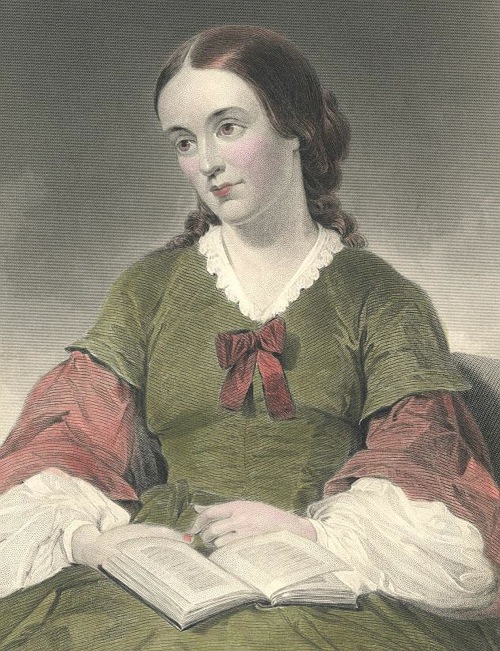
Margaret Fuller


Personal Statement: My name is Margaret Fuller and I was born on May 23, 1810 in Cambridge, Massachusetts. I received my basic education from my father, Timothy Fuller, but later on I studied in the Harvard Library where I learned languages such as Latin and Greek. I am a strong advocate of women's rights and I present radical views to the antebellum American society. I am a feminist, teacher, literary critic, and writer. Through my work, I contribute to the spreading of the women's rights movement.

Issues: In 1839, I started holding meetings for men and women called "Conversations". I led all of the speeches and organized the topics for each meeting. These meetings sought to stimulate women's self-expression, independent thinking and allowed them to express their worries as well as difficulties. Around 1841, I began allowing men to attend these meetings. I believe that having men there encouraged them to fight for women's rights and allowed them to support us by letting them see how gender inequality affected women throughout our speeches and discussions. Conversations became a strong base for feminism. My technique for these meetings was motivated by Socrates; I devoted each conversation to a philosophical question and had the participants engage in discussion before sharing my own views.


Solutions: My solution to this issue of inequality between genders is individual moral reform. I write books and publish articles in newspapers that display the women's perspective and call both genders to action. I am a journalist in The Dial, where I write columns filled with contributions from other women. My written works are my greatest success, because thanks to them, people were able to realize what was going on and take a stand. My opposition, co-workers and other editors in the newspaper, deeply criticized my writing and felt that it should not be published due to my feminist views.

Relationship to Others:

I would feel most comfortable with my fellow women’s rights activists like Susan Brownwell Anthony, Lucretia Mott, Angelina Grimke, and Elizabeth Stanton as they share the same views as I do.

Henry David Thoreau


Personal Statement:

Hello, my name is David Henry Thoreau, but you can just call me Henry Thoreau. I was born in Concord, Massachusetts on July 12, 1817. I attended courses in rhetoric, classics, philosophy, mathematics, and  at Harvard College  between 1833 and 1837. After graduating, I began to teach in Concord, but my refusal to beat my students led to my dismissal from the position after only two weeks. From there, I went on to open a school with my brother, but after he died from lockjaw, I was forced to close it. In 1845, I decided to build a small cabin on the shore of Walden Pond, which is where I remained for two years to advocate for being self-reliant and living a simple life. During that time, I worked odd jobs in a near by village and ate the vegetables that I grew myself. I devoted most of my time to observing nature, reading, and writing, while keeping a detailed journal of my observations, activities, and thoughts. Sometime after, I was imprisoned for a night because I refused to pay a toll tax that supported the Mexican War. I am I notable person because I was a philosopher and creative artist that encouraged Transcendentalism and individualism. I also was an scientific originator as well as a strong antislavery activist. In my lifetime, I've contributed my works of literature as well as environmental developments. My essay "Civil Disobedience" was about injustice by the government, especially slavery. Because of my love of nature and the pureness of it, the book "Walden" that I wrote while secluded in the cabin on Walden Pond, became a base for environmental movements.I am valued for my early understanding of the idea that nature is made up of interrelated parts. Some even consider me to be the father of the environmental movement. My writings were spread far and wide, and because of how many people agreed and related to what was said, many people used my ideas as fuel for the reform movements of the Antebellum Era.

Issue(s):
I was a strong supporter of Transcendentalism. I believe that particularly organized religion and political parties were ultimately corrupted the purity of individuals, and that people should rely on themselves and be independent if they want to be their best.  II firmly believe that t is only from such real individuals that true communities can be formed, and my hopes were to spread those beliefs. Because of these beliefs, I think that the government is bound to be corrupt and unjust. I was a strong abolition supporter. My motives were purely philosophical, as I did not believe in organized religious parties, although many say nature and transcendentalism were my religion. 

Solution(s):
I hoped that my essays and literature would influence individuals to change their mind set about slavery and see that Transcendentalism was the rightful path to take spiritually. Because I lived in Massachusetts, many also saw themselves as antislavery activists. However, they did not fully commit to the cause and some still chose to participate in the commerce and agricultural trade that supported it, so I believed it was my duty to try to convince them to fully invest in our side. I tried to make people see that thee only effective and sincere way to express opposition is through concrete deeds and acts of resistance.  Some did not agree with my dedication to nature and want to live in solitude, calling it "unmanly"  and said I  wanted to "lower [myself] to the level of a woodchuck and walk on four legs." Although I admit that my essays influenced many more people after my death, including Gandhi, JFK, and Martin Luther King Jr, I believe that I changed the minds of many about abolition as well as how to support it, along with transcendentalism, despite this criticism.

Relationships with Others:
I would feel comfortable sitting next to  Lucretia Mott, Elizabeth Cady Stanton, William Lloyd Garrison, Angelina Grimke, Sojourner Truth, Harriet Tubman, Horace Greeley, Adin Ballou, Theodore Parker, Wendell Phillips, Arthur Tappan, John Greenleaf Whittier, David Walker, or Theodore Dwight Weld due to them also being against slavery in some way. I would also get along with Margaret Fuller and Lydia Marie Child because they were also transcendentalists.